
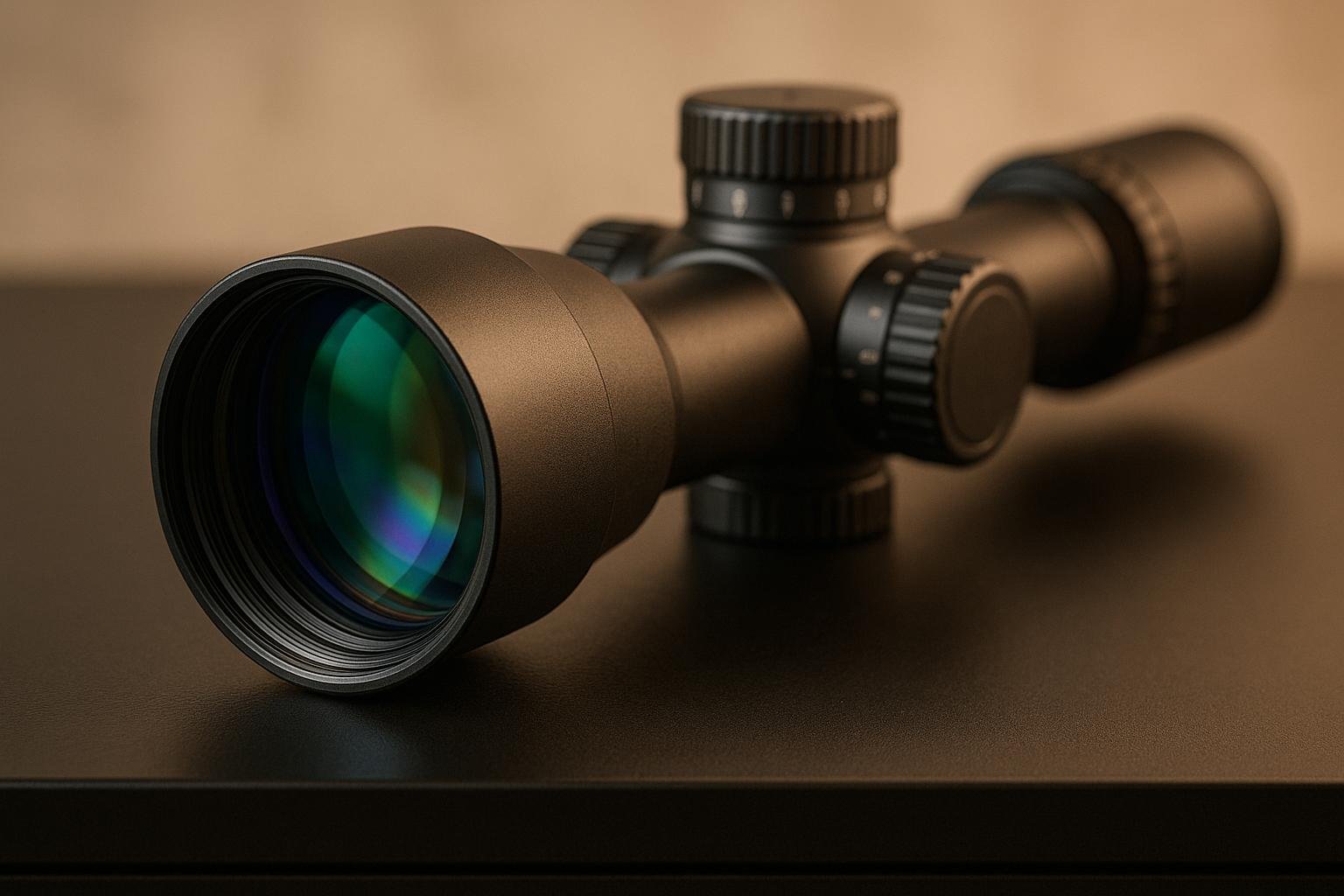
When you’re shopping for a scope, optical coatings are often the unsung heroes of performance. These ultra-thin layers on lenses improve light transmission and protect against scratches, water, and fogging. But flashy marketing terms like "fully multi-coated" don’t always tell the full story. Testing is the only way to know how coatings actually perform.
Key Takeaways:
- Light Transmission: High-quality coatings can achieve up to 95% light transmission, ensuring brighter, sharper images.
- Durability: Tests like abrasion resistance, temperature cycling, and humidity exposure reveal how coatings hold up over time.
- Clarity in the Field: Field tests assess how coatings handle low-light conditions, glare, and color accuracy during real use.
How Testing Works:
- Lab Tests: Use tools like spectrophotometers to measure light transmission and durability under controlled conditions.
- Field Tests: Evaluate clarity, contrast, and durability in outdoor settings, mimicking real-life scenarios.
Testing Your AR Coatings: How It’s Done
Laboratory Testing Methods for Optical Coatings
When manufacturers boast about "premium coatings" or "maximum light transmission" on their scopes, those claims aren’t just marketing fluff – they’re backed by rigorous laboratory testing. These tests, conducted under controlled conditions, help verify how well coatings perform and ensure they meet the promised standards.
Let’s dive into how light transmission is measured and how coatings are tested for durability and resilience.
Spectrophotometry for Light Transmission
Spectrophotometry is a go-to method for measuring how much light passes through a coated lens. Using a spectrophotometer, specific wavelengths of light are sent through the lens, and the device measures how much light is transmitted versus how much is reflected or absorbed. This process evaluates performance across the visible spectrum (roughly 400 to 700 nanometers), ensuring consistent results.
Why does this matter? If a coating doesn’t transmit light evenly across all wavelengths, you might notice subtle color shifts in certain lighting conditions, like at dawn or dusk. Additionally, the test checks how coatings perform when viewed at an angle. High-quality multi-layer coatings tend to maintain consistent transmission even off-axis, while simpler coatings often show a significant drop in performance.
Durability and Environmental Tests
Durability tests simulate the wear and tear coatings endure over time. A lens might look flawless when new, but how does it hold up in real-world conditions? That’s where these tests come in:
- Abrasion Resistance Testing: Coatings are subjected to materials like steel wool or sand to simulate wear. The surface is then inspected for damage. High-end coatings can withstand numerous abrasion cycles without visible wear.
- Temperature Cycling Tests: Rapid temperature changes mimic transitions between warm and cold environments. These tests reveal whether coatings crack, peel, or lose adhesion under such stress. The best coatings stay intact despite these shifts.
- Humidity and Salt Spray Testing: These tests replicate harsh conditions, such as high humidity or saline environments found near coasts or in tropical climates. This ensures coatings don’t fog, corrode, or develop imperfections. Hydrophobic coatings, in particular, excel at repelling moisture and maintaining clarity.
- Adhesion Testing: Using methods like tape-pull or cross-hatch tests, this evaluates how securely the coating adheres to the glass. Poor adhesion can lead to flaking, which permanently affects optical performance.
Beyond environmental factors, coatings also need to withstand direct energy and mechanical stress.
Damage Threshold Testing
Damage threshold tests measure how much energy or stress a coating can endure before it fails. These tests are essential for determining long-term durability.
- Laser Damage Threshold Testing: Coatings are exposed to increasingly powerful laser pulses until damage occurs. This test is vital for applications in high-UV or intense light conditions, ensuring the coating can handle strong energy inputs.
- Mechanical Stress Testing: Pressure is applied to simulate mounting stress or recoil shock. Durable coatings maintain their optical properties even under significant mechanical strain.
- Thermal Shock Testing: Unlike gradual temperature cycling, this test involves rapid temperature changes to see how coatings respond to sudden shifts. Coatings that pass this test are better equipped to handle abrupt transitions, such as stepping from an air-conditioned room into outdoor heat.
These tests provide manufacturers with objective data to back up their claims. When you see a scope advertised as offering high light transmission or exceptional durability, you can trust those claims are grounded in rigorous, standardized testing.
Field Testing Methods for Scope Coatings
Laboratory tests provide a controlled environment to establish a foundation for performance, but field tests bring a scope’s capabilities to life. These real-world evaluations reveal how coatings perform under the unpredictable conditions hunters and shooters face. By combining lab results with field observations, testers gain a well-rounded understanding of a scope’s performance.
Clarity and Contrast Tests
Clarity testing in the field examines how well scope coatings handle natural lighting conditions throughout the day. Unlike the consistent light of a lab, outdoor settings challenge coatings with shifting light levels, especially during dawn and dusk. These "golden hour" and "blue hour" periods are critical for hunters, as they often determine whether a target is spotted or missed. Testers compare scopes side-by-side during these times, noting which models deliver better contrast and preserve color accuracy as light fades.
Backlighting tests simulate challenging scenarios like observing animals silhouetted against bright snow or sky. High-quality anti-reflective coatings reduce internal reflections that can wash out images or create annoying glare. Field testers position themselves to face bright sunlight or clouds, evaluating how well each scope maintains clear, usable contrast under these harsh conditions.
Color accuracy is another key factor. Testers observe natural elements like autumn leaves, bird feathers, or distinct terrain features through various scopes, comparing how each renders colors. This meticulous process helps identify which coatings provide the most realistic and vibrant views.
These clarity and contrast tests naturally lead into durability evaluations, as scopes often face harsh outdoor elements during use.
Outdoor Durability Testing
Durability testing in the field examines how coatings withstand the wear and tear of actual use. Unlike lab simulations, this testing subjects scopes to the unpredictable challenges of hunting seasons, competitive shooting, or tactical scenarios.
Weather resistance is a key focus. Testers expose scopes to conditions like morning dew, observing how effectively hydrophobic coatings repel moisture. They also test how scopes handle sudden temperature changes, such as moving from an air-conditioned vehicle to a hot outdoor setting, or from a warm cabin to freezing conditions.
Abrasion testing happens naturally during extended use. Scopes are bumped against tree branches, rubbed by straps, or handled with dusty hands. After months of field use, reviewers inspect lens surfaces under magnification to see how well the coatings resist scratches and wear.
Cleaning performance is also critical. Testers deliberately expose lenses to contaminants like gun oil, insect repellent, or tree sap, then evaluate how easily these substances can be cleaned without leaving residue. High-quality coatings should allow for gentle cleaning without risking damage to the lens surface.
Parallax and Focus Testing
Dynamic focus testing measures how well a scope maintains sharpness when quickly shifting between targets at varying distances. For hunters, this can mean transitioning from a close-range shot to scanning a distant hillside. Scopes with strong optical systems handle these transitions smoothly, while others may show slight focus inconsistencies.
Parallax testing evaluates whether a scope maintains its zero even when the shooter’s alignment isn’t perfect. In field conditions, testers intentionally vary their position to assess how well the scope compensates for minor misalignment – an essential feature during long shooting sessions when fatigue can affect form.
Edge-to-edge sharpness is another important aspect. Testers assess image quality across the entire field of view, from the center to the edges. While this can be measured in a lab, field testing reveals how coatings perform when tracking moving targets or scanning for game in diverse environments.
Low-light focus accuracy is tested during dawn and dusk, the same times used for clarity evaluations. As light levels drop, inferior coatings may struggle to maintain precise focus, especially on low-contrast targets. Testers revisit specific objects at known distances, comparing focus performance in bright and dim conditions to gauge consistency.
These field tests provide valuable insights for hunters, competitive shooters, and tactical users, helping them choose scopes that deliver reliable performance in the environments where they’ll actually be used.
sbb-itb-31b92c7
Key Performance Metrics and Practical Applications
When it comes to optical coatings, the numbers behind testing can offer invaluable insights, helping you choose the right scope for your needs. These metrics take lab results and connect them to real-world performance, giving you a clearer picture of what to expect in the field.
Test reports typically present this data through standardized graphs and ratings, making it easier to evaluate and compare scope performance.
Important Coating Performance Metrics
- Light Transmission: This measures how much light passes through the scope. High-quality scopes are designed to maximize light throughput, delivering brighter and sharper images, especially in low-light conditions.
- Reflectivity: Anti-reflective coatings are key here, as they minimize the amount of light bouncing off lens surfaces. Even small amounts of reflectivity can lead to noticeable light loss, affecting image clarity.
- Scratch Resistance: Hardness tests assess how well a coating can withstand abrasions caused by cleaning, dust, or accidental contact. Higher scratch resistance means better long-term protection for your scope.
- Environmental Durability: Coatings are tested under harsh conditions like extreme temperatures, high humidity, and salt spray exposure. These tests ensure the coatings maintain their performance and clarity, even in challenging environments.
- Spectral Response Curves: These curves evaluate how coatings perform across the visible light spectrum. Consistent performance across all wavelengths ensures accurate color representation and contrast, which is critical for clear, true-to-life images.
By combining lab data with field testing, these metrics help bridge the gap between technical specifications and everyday functionality. Knowing how to interpret them allows for a more objective comparison of scopes.
How to Read Test Results
Test results are often displayed in graphs and standardized ratings, making them easier to interpret. For example:
- Transmission Curves: These show light throughput across different wavelengths of visible light. A smooth, uniform curve indicates minimal color distortion, which is ideal.
- Environmental Tests: These use pass/fail criteria to assess performance under extreme conditions. Meeting standards like MIL-STD-810 confirms a scope’s reliability in severe temperatures, high humidity, and constant vibration.
- Durability Ratings: These come from abrasion tests that measure how many cycles a coating can endure before showing wear. Consistent testing methods across different models make it easier to compare durability.
How to Choose the Right Scope Based on Coating Tests
Choosing the right scope for hunting, bird watching, or camping becomes easier when you rely on proven coating test data. Below are some key tips to help you turn test results into practical scope choices.
Making Smart Scope Decisions
Start by identifying your primary activity and the conditions you’ll encounter. For hunters operating in low-light settings, look for scopes with high light transmission to ensure clear visibility during dawn or dusk. Bird watchers, on the other hand, should focus on scopes that demonstrate durability in varying weather conditions. The test data mentioned earlier can guide you in evaluating performance in these scenarios.
If you’re a backcountry adventurer, prioritize scopes that maintain image quality despite frequent cleaning or rough handling. For those in coastal or humid environments, scopes with proven salt spray and moisture resistance are essential.
Additionally, pay attention to temperature cycling test results. These tests reveal whether a scope’s coatings can withstand seasonal temperature changes while maintaining adhesion and clarity.
Using Expert Reviews and Resources
While technical test data is invaluable, expert reviews provide practical insights that bridge the gap between lab results and real-world performance. These reviews complement the coating tests discussed earlier and help you make well-rounded decisions.
Platforms like Scope It Outdoors offer detailed reviews that combine technical analysis with hands-on field testing. Their experts evaluate whether a scope’s laboratory performance holds up in diverse outdoor conditions. For example, they might explain how high light transmission enhances visibility in dim lighting or how scratch-resistant coatings perform after prolonged use.
Look for reviews that provide side-by-side comparisons of scopes tested under identical conditions. These comparisons go beyond manufacturer claims, offering reliable insights. Additionally, reviews that include long-term testing can highlight how well a scope retains its optical quality over time.
Conclusion
Knowing how optical coating tests work can make a big difference when choosing the right scope for your outdoor adventures. Lab tests lay the groundwork, showing how coatings handle tough conditions like low light and harsh weather.
But lab results only tell part of the story. Field tests step in to show how coatings perform when you’re actually out there – whether it’s cutting glare, boosting image clarity, or handling the wear and tear of real use. These tests bridge the gap between controlled environments and the unpredictability of the outdoors, giving you a fuller understanding of what a scope can do.
Key metrics like light transmission, scratch resistance, and temperature durability highlight what to look for. For instance, a scope that delivers excellent light transmission during dawn hunts or remains clear after hours of UV exposure proves its worth where it matters most – in the field.
FAQs
How do optical coatings help scopes perform better in low-light conditions?
Optical coatings play a key role in boosting the performance of scopes, especially in low-light settings. By cutting down reflections on lens surfaces and increasing light transmission, these coatings allow more light to pass through. The result? Brighter and sharper images with enhanced contrast and detail.
Anti-reflective coatings are particularly useful for reducing glare and preventing light loss. This makes scopes highly effective for activities like hunting, bird watching, or camping during early morning, late evening, or nighttime. With these coatings, you can enjoy clearer views, even when lighting conditions are less than ideal.
What tests ensure a scope’s optical coatings are durable and reliable?
Manufacturers put optical coatings through rigorous testing to ensure they are tough and dependable. These tests typically include abrasion resistance tests to assess how well the coatings endure physical wear, humidity and temperature shock tests to mimic extreme weather conditions, and laser radiation endurance tests to measure their performance under intense light exposure.
Guided by standards like MIL-Specs and ECSS protocols, these evaluations ensure the coatings can handle real-world challenges. This means your scope is built to perform reliably, whether you’re out hunting, birdwatching, or simply enjoying the outdoors.
How do I understand optical coating test results to pick the right scope for my outdoor activities?
To find the right scope, pay attention to test results for abrasion resistance, adhesion, and optical performance. A good coating should stand up to wear, stay firmly in place, and offer excellent light transmission with minimal glare. These qualities are key for clear, dependable performance during outdoor activities like hunting, bird watching, or camping.
When evaluating these results, prioritize coatings that can endure tough conditions while keeping image clarity intact. Durable coatings not only safeguard your scope but also improve visibility, making them a must-have for anyone who spends time outdoors.