
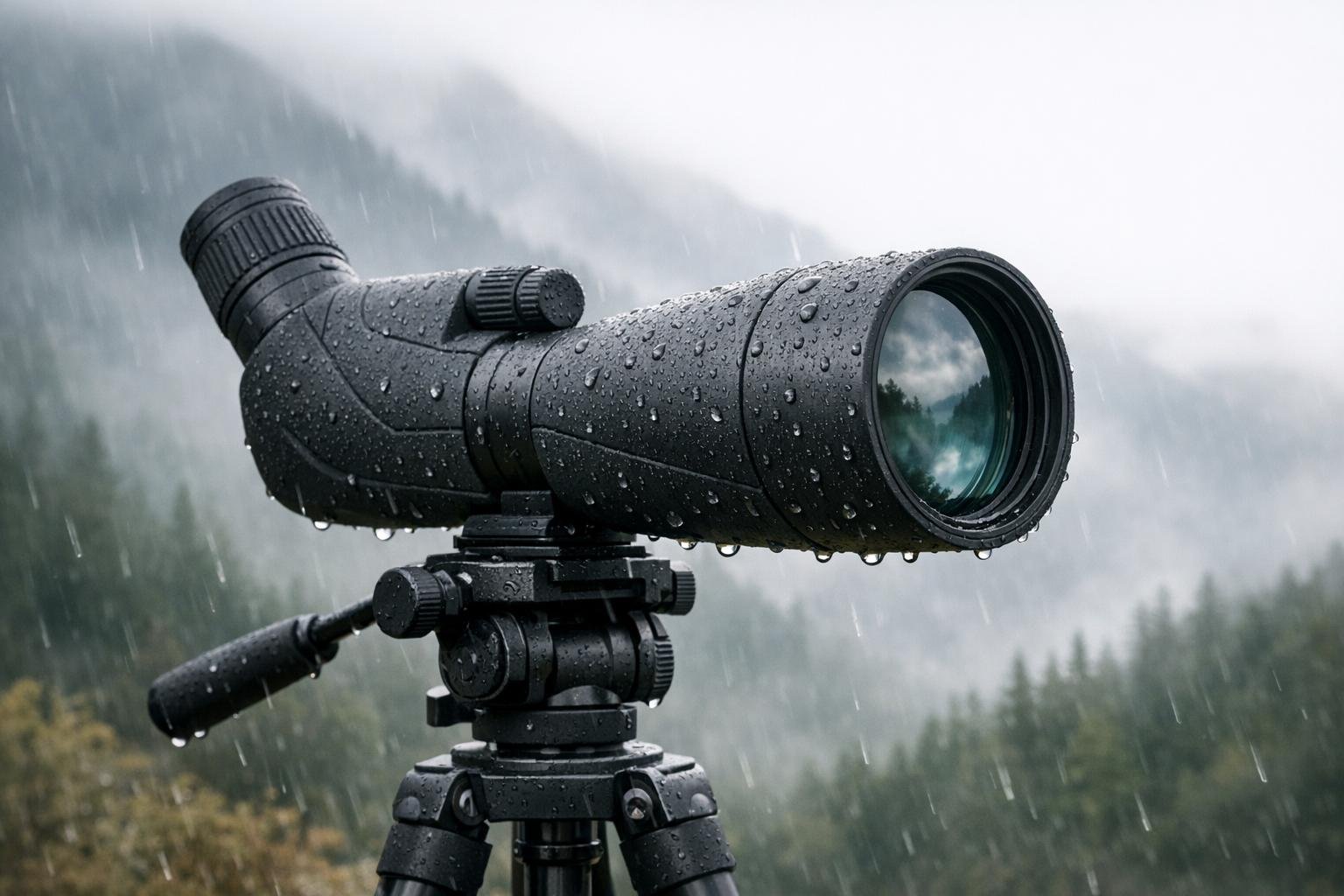
When you’re outdoors in unpredictable weather, a reliable spotting scope is essential. Weatherproof spotting scopes are designed to withstand rain, fog, dust, and temperature changes without losing performance. Here’s a quick breakdown of the key features to look for:
- O-Ring Seals: These create airtight and watertight barriers, protecting internal components from water, dust, and debris. Look for models with IPX7 ratings for better waterproofing.
- Gas Purging: Nitrogen or argon gas replaces internal air, preventing fogging during sudden temperature changes.
- Durable Materials: Magnesium alloy and rubber armoring ensure the scope can handle impacts and tough conditions.
- Lens Coatings: Fully multi-coated lenses improve light transmission, while hydrophobic coatings keep lenses clear in wet environments.
Entry-level weatherproof scopes start at $199, while premium models like the Kowa TSN-880 Series exceed $2,000. Understanding these features helps you choose a scope that performs well in any weather. Read on for a detailed guide to each feature and a comparison of top models.
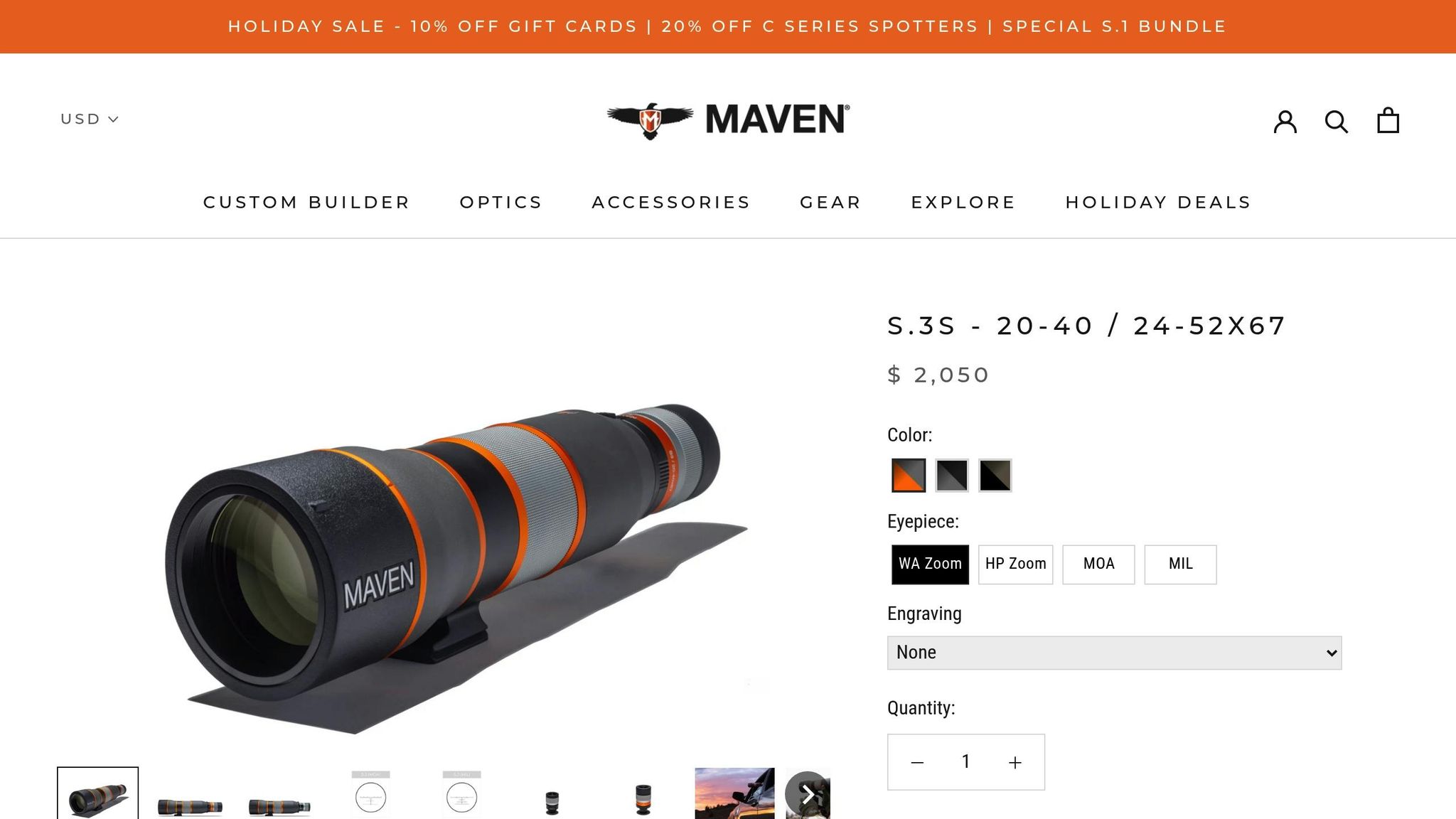
Is This the Best Value Spotting Scope on the Market?! – Maven S3 20-40x67mm
Core Weatherproofing Features
Weatherproof spotting scopes rely on a trio of essential systems: O-ring seals to ensure airtight and watertight protection, nitrogen (or similar gas) purging to eliminate internal moisture, and durable materials like magnesium alloy and rubber armoring to maintain these seals even under tough conditions. Together, these features deliver reliable performance no matter the environment.
O-Ring Seals for Waterproofing
O-rings, made of rubber gaskets, are placed within the frame to seal gaps between the lenses and the housing. These seals form a barrier that keeps out moisture, dust, sand, and other debris, protecting the internal optical chamber.
Devices meeting the IPX7 waterproof standard can withstand submersion in up to 3 feet of water for 30 minutes. However, as Celestron notes:
"Waterproofing isn’t meant for submerging. If the spotting scope is submerged underwater for longer than a few seconds, water may begin to seep into the spotting scope causing damage".
This rating is especially reassuring during accidental drops into puddles or streams and provides solid protection in heavy rain. While O-rings effectively block external elements, they cannot prevent internal condensation – that’s where gas purging comes in. When evaluating waterproof ratings, it’s important to distinguish between "water-resistant" models, which can handle light rain, and fully "waterproof" models designed for brief submersion.
Nitrogen Purging for Fogproofing
Nitrogen purging involves replacing the air inside the optical barrel with dry, inert nitrogen gas. This process prevents condensation caused by sudden temperature changes. For instance, when moving from a warm car into freezing outdoor air or during humid early mornings, nitrogen-purged scopes remain clear, while non-purged optics often fog up internally.
Since nitrogen accounts for about 79% of Earth’s atmosphere, it’s an environmentally friendly and efficient choice for this process. Some high-end manufacturers opt for argon or a mix of argon and krypton, as argon’s larger molecules are less prone to leakage over extended periods. As Nocs Provisions explains:
"It’s the inserted gas on top of the airtight sealing that brings waterproof binoculars up to fogproof status".
For gas purging to work effectively, the scope must be sealed with O-rings to prevent the gas from escaping and to block external moisture from entering. Together, these elements ensure complete weatherproofing.
Durable Construction and Materials
The material used in a scope’s chassis plays a critical role in maintaining its seals under stress. Magnesium alloy, commonly found in premium models, offers an excellent balance of strength and lightweight design. Mid-range scopes often use aluminum, while budget-friendly options may feature polycarbonate or fiberglass composites. These materials are lighter and more affordable but tend to be less resilient under extreme impact.
Rubber armoring adds another layer of durability by providing a non-slip grip, resisting abrasions, and absorbing shocks. It also helps maintain internal alignment (collimation) by cushioning the scope during transport. This combination of materials not only reinforces the seals but ensures dependable performance in the field. For example, the Vortex Viper HD 20-60×85, priced at $1,349.99, boasts ultra-rugged construction with full rubber armoring and has earned a 4.8/5 rating from 152 reviews.
| Feature | Material/Method | Primary Benefit |
|---|---|---|
| Waterproofing | O-Ring Seals | Blocks moisture and debris |
| Fogproofing | Nitrogen or Argon Gas | Prevents internal fogging |
| Impact Resistance | Rubber Armoring | Absorbs shock and improves grip |
| Chassis Strength | Magnesium Alloy | Durable yet lightweight |
Lens Protection and Coatings
Protecting the lens of your spotting scope is just as important as safeguarding its internal components. While O-rings and nitrogen purging keep the internal chamber secure, lens coatings provide the first layer of defense against external elements. These coatings not only enhance light transmission but also maintain clarity when faced with rain, dust, or glare. Together, these features ensure your optics deliver sharp, reliable performance even in tough conditions.
Multi-Coated Lenses
Spotting scopes work by transmitting light through their lenses. However, uncoated lens surfaces can lose 4%–6% of light at each interface. Adding a single anti-reflective layer reduces that loss to about 1.5%–2%, while fully multi-coated lenses can achieve light transmission rates exceeding 95%. To put it in perspective, standard spotting scopes typically transmit around 90% of available light, whereas high-end optics can reach a theoretical maximum of 98%.
Steven L., Director of Product Intelligence at OpticsPlanet, highlights the importance of coatings:
"Coatings reduce glare, and loss of light due to reflection. More coatings normally lead to better light transmission and sharper contrast".
When shopping for a spotting scope, look for the term "fully multi-coated." This indicates that multiple anti-reflective layers have been applied to every air-to-glass surface, maximizing light transmission. This is especially beneficial in low-light conditions – like dawn, dusk, or cloudy days – when every bit of light makes a difference. These coatings play a crucial role in maintaining clear, high-contrast views even when visibility is compromised by external factors.
Hydrophobic Coatings
Rain, snow, and grime can quickly obstruct your view, but hydrophobic coatings are designed to combat these challenges. These specialized coatings cause water to bead up and roll off the lens instead of spreading into a film, keeping your view clear even in wet conditions. Jeff Byrnes, an Outdoorsman and Hunting Technology Expert, explains:
"These coatings, applied to the outside of the objective lenses, make the rainwater bead up and fall away from your view. This way, you can keep enjoying your observations even when the rain starts falling".
Hydrophobic coatings are typically applied to the exterior of the objective lens, not only repelling water but also resisting fingerprints and oils. This makes cleaning in the field easier and reduces the risk of scratches caused by trapped dirt or grit. Some manufacturers, like Vortex, go a step further by adding scratch-resistant layers (e.g., ArmorTek) to protect the delicate anti-reflective coatings. To maintain these coatings, always clean your lenses with a microfiber cloth and lens-safe spray. Avoid spraying directly onto the lens or using abrasive materials like t-shirts, which can damage the coating and compromise performance.
sbb-itb-31b92c7
Comparison of Weatherproof Spotting Scopes
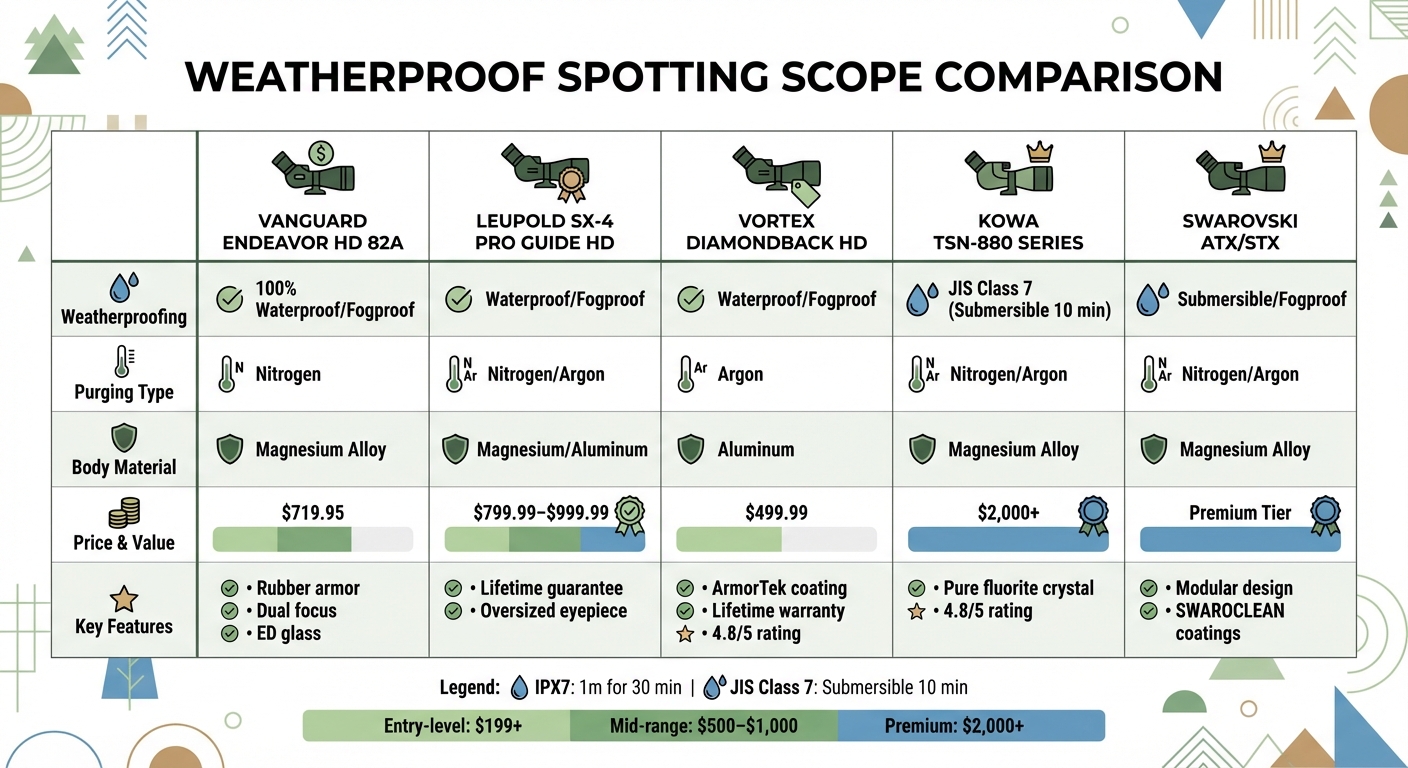
Weatherproof Spotting Scope Comparison: Features, Specs, and Prices
When it comes to spotting scopes built for challenging environments, understanding the differences in durability, lens coatings, and construction is key to finding the right model.
Comparison Table of Key Models
Selecting a spotting scope often comes down to striking the right balance between durability, features, and price. Critical elements like body materials, purging gases, and waterproofing standards significantly influence how well a scope performs under harsh conditions.
For instance, the Vanguard Endeavor HD 82A ($719.95) uses nitrogen purging to prevent fogging inside the lens, while the Vortex Diamondback HD employs argon gas, which is less prone to leakage over time and offers better long-term fogproofing. High-end models, such as the Vortex Razor HD, also rely on argon for superior fog resistance.
Construction materials play a pivotal role in durability. Magnesium alloy, known for its strength and lightweight properties, is a preferred choice in scopes like the Leupold SX-4 Pro Guide HD (priced between $799.99 and $999.99) and the Vanguard Endeavor HD 82A. For extreme waterproofing, the Kowa TSN-880 Series boasts JIS Class 7 certification, meaning it can handle full submersion for up to 10 minutes. If you’re looking for a more budget-friendly option, the SVBONY SV406P offers impressive IPX7 weatherproofing at a mid-range price point.
Here’s a quick breakdown of how these models compare:
| Model | Body Material | Purging Type | Weatherproofing | Price | Key Features |
|---|---|---|---|---|---|
| Vanguard Endeavor HD 82A | Magnesium Alloy | Nitrogen | 100% Waterproof/Fogproof | $719.95 | Rubber armor, dual focus, ED glass |
| Leupold SX-4 Pro Guide HD | Magnesium/Aluminum | Nitrogen/Argon | Waterproof/Fogproof | $799.99–$999.99 | Lifetime guarantee, oversized eyepiece |
| Swarovski ATX/STX | Magnesium Alloy | Nitrogen/Argon | Submersible/Fogproof | Premium Tier | Modular design, SWAROCLEAN coatings |
| Kowa TSN-880 Series | Magnesium Alloy | Nitrogen/Argon | JIS Class 7 (Submersible) | $2,000+ | Pure fluorite crystal, 4.8/5 rating |
| Vortex Diamondback HD | Aluminum | Argon | Waterproof/Fogproof | $499.99 | ArmorTek coating, lifetime warranty |
The Leupold SX-4 Pro Guide HD stands out with its lifetime guarantee and reliable performance, making it a top choice for serious hunters. Meanwhile, the Vortex Diamondback HD, priced at $499.99, delivers exceptional value with its ArmorTek coating and a strong 4.8/5 user rating. For those who want the best of the best, the Kowa TSN-880 Series combines a durable magnesium body with advanced JIS Class 7 waterproofing, earning its reputation as a premium option.
Testing Weatherproofing Performance
Manufacturers put scopes through rigorous weatherproofing tests to ensure they can handle real-world conditions. These tests measure how well a scope stands up to sudden water exposure, temperature shifts, and physical stress.
Waterproof tests simulate splashes and brief submersions to check the integrity of O-rings. For instance, the Kowa TSN‑880 Series meets the JIS Class 7 standard, which involves enduring a 10-minute full submersion in water without any moisture seeping inside. Another common standard is the IPX7 rating, which certifies a scope can handle immersion in up to 1 meter of water for 30 minutes.
Fogproofing tests evaluate how scopes perform during rapid temperature changes. To prevent internal condensation, manufacturers purge scopes with nitrogen or argon gas. For example, the Vortex Diamondback HD, introduced in August 2020, uses argon purging to maintain a clear view even when temperatures fluctuate quickly. These tests also ensure that the scope’s optical alignment remains intact under such conditions.
Impact and durability tests examine the scope’s ability to withstand drops and physical shocks. Features like rubber armoring and sturdy chassis materials are tested to confirm their protective capabilities. Additionally, dust ingress tests verify that O-rings effectively block particles, as noted by Jeff Byrnes. Together, these evaluations ensure that the scope’s weatherproof claims hold up in the field.
When assessing a scope’s weatherproofing, look for specific certifications such as IPX ratings or JIS standards instead of vague terms like "weather-resistant." Make sure the scope is both O-ring sealed and gas purged (with nitrogen or argon), as sealing alone won’t prevent fogging during sudden temperature changes.
Conclusion
Weatherproof scopes are built to handle tough environments, thanks to features like O-ring seals, gas purging, rubber armoring, and hydrophobic coatings. These elements ensure reliable performance no matter the conditions. O-ring seals keep water and debris out, nitrogen or argon purging prevents fogging during temperature changes, rubber armoring absorbs shocks while providing a secure grip, and hydrophobic coatings help rain roll off the lenses, keeping your view clear.
Together, these features protect the delicate internal components of your scope, prolonging its life and maintaining its performance. Whether you’re braving freezing mornings on a hunt, birdwatching in humid coastal areas, or exploring dusty desert trails, a well-weatherproofed scope ensures you’ll have clear optics when it counts. The added protection makes the investment worthwhile:
"That peace of mind, knowing that your expensive spotting scope or binoculars will be just fine if you get rained on or accidentally drop your optics in a puddle is well worth the extra cost." – Jeff Byrnes, Outdoorsman and Hunter
When comparing models, focus on scopes with O-ring seals and gas purging for fog prevention. Check for certifications like IPX7 ratings, which are more reliable than vague "weather-resistant" labels. For pricing details, refer to the comparison section above.
Visit Scope It Outdoors for expert reviews and to find the perfect weatherproof scope for your next adventure.
FAQs
What’s the difference between water-resistant and waterproof spotting scopes?
The main distinction between the two comes down to how well they handle water exposure. Water-resistant spotting scopes can cope with light rain or the occasional splash but aren’t meant to endure heavy or prolonged contact with water. In contrast, waterproof spotting scopes are sealed with O-rings and often filled with nitrogen to keep water out of the optical tube. That said, they’re not designed for long-term submersion. If you expect to use your scope in consistently wet or unpredictable weather, opting for a waterproof model ensures better reliability and longevity.
How does gas purging prevent spotting scopes from fogging up?
Gas purging with nitrogen or argon involves replacing the humid air inside a spotting scope with dry, inert gas. These gases have virtually no water vapor, which means they effectively prevent internal fogging caused by sudden temperature shifts. This ensures your view remains crisp and clear, no matter the weather.
Beyond just keeping the lenses fog-free, gas purging also removes moisture that could damage the scope’s internal components. This added layer of protection boosts the scope’s longevity and reliability, making it a dependable companion for outdoor activities.
Why are magnesium alloy and rubber armor important features in weatherproof spotting scopes?
Magnesium alloy is often used for spotting scope housings due to its combination of strength and lightweight durability. This material not only keeps the scope manageable to carry but also helps absorb shocks and impacts, protecting the delicate internal optics from damage.
To further boost protection, rubber armor is added. This layer provides extra shock absorption and resists abrasions, making it ideal for tough outdoor conditions. Plus, it offers a secure, non-slip grip, so the scope stays steady in your hands, even in wet or uneven terrain. Together, these materials work to shield your scope and ensure it performs reliably, no matter the environment.