
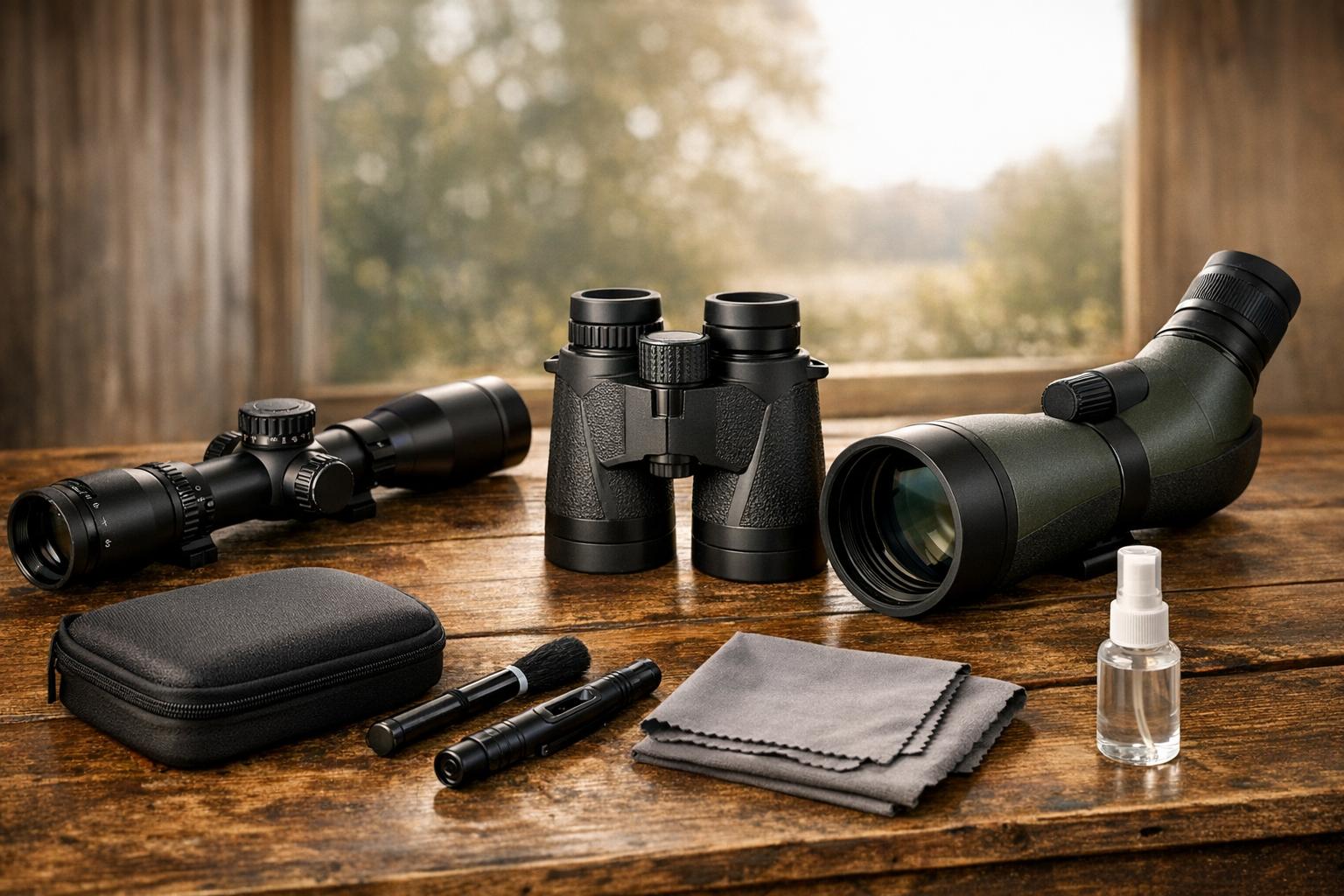
Your hunting optics – like rifle scopes, binoculars, and spotting scopes – are essential tools that require proper care to remain effective. Scratches, dirt, and damage can reduce clarity, void warranties, and lead to expensive replacements. This guide breaks down how to protect your optics before, during, and after your hunt to ensure they stay in top condition.
Key Takeaways:
- Before the Hunt: Inspect lens caps, covers, and mounts. Pack cleaning tools like microfiber cloths, air blowers, and optics-safe wipes. Secure gear in padded cases during transport.
- In the Field: Keep lens caps closed when not in use. Use padded surfaces for resting optics. Protect against weather and terrain by using covers or harnesses.
- After the Hunt: Clean lenses with proper tools, inspect for damage, and store optics in a cool, dry place with silica gel to control humidity.
Investing in accessories like flip-up lens caps, neoprene covers, and padded cases can further shield your optics from damage. Regular maintenance and careful handling ensure your gear stays reliable and avoids costly repairs.
Before the Hunt: Protection Checklist
Check Your Protective Gear
Make sure all your protective gear is accounted for and in good condition. This includes lens caps, flip-up covers, neoprene sleeves, and harnesses. Test the flip-up covers to ensure the hinges and springs work properly – they should snap into place securely without any wobbling. Inspect neoprene covers for tears that could leave the glass vulnerable during a fall. Adjust your binocular harness so your optics stay high on your chest, minimizing the risk of them swinging into rocks, trees, or metal hardware. If you’re transporting gear in a vehicle, check that your hard rifle cases have intact padding and secure hardware to keep your optics safe during the ride.
Pack Your Cleaning Tools
A well-stocked field kit is a must. Include items like a rocket-style air blower, a soft camel-hair or synthetic lens brush, pre-moistened optics-grade wipes, a clean microfiber cloth, and a small bottle of lens cleaning solution that’s safe for coated lenses. Start with the air blower to remove loose debris, follow up with the brush, and finish by gently cleaning with wipes or a microfiber cloth. Use circular motions, working from the center of the lens outward. Keep these tools in a padded pouch stored in your daypack or bino harness. Avoid using T-shirts, bandanas, or paper towels – they can leave fibers behind or cause micro-scratches on your lenses.
Inspect Your Optics and Mounts
Before heading out, give your optics a thorough check under good indoor lighting. Look for any scratches, chips, coating wear, or signs of fogging on the lenses. Tilt the optic and use a flashlight to spot fine streaks or cleaning marks, and examine the lens edges for impact chips that could indicate previous damage. Check the scope for any play in the rings or rail by twisting and pushing it gently. Use a torque wrench to tighten screws to the manufacturer’s specified inch-pound setting (usually 15–25 in-lb for ring caps). Afterward, confirm your rifle is still zeroed in by testing it at the range. Once everything checks out, secure your gear for transport.
Plan Your Transport Method
When transporting your gear in a vehicle, store rifles in padded cases with lens caps on, ensuring the scope isn’t bearing any weight when the case is closed. The foam padding should primarily cushion the stock and barrel, not the optic. Keep loose items like ammo boxes, bipods, or knives away from the optics to prevent accidental damage on rough terrain. For binoculars and spotting scopes, use padded, compartmentalized cases or secure bino harnesses rather than leaving them loose where they could slide into hard surfaces. In cold weather, let your optics warm up gradually by keeping them in their cases when moving indoors. This reduces condensation and prevents dust or grit from sticking to the lenses.
In the Field: Handling Checklist
Proper Carrying and Slinging Methods
When you’re out in the field, every choice you make about handling your gear can protect your optics. Keep lens caps closed while moving to keep dust and debris off the glass. If you’re using binoculars, opt for a harness instead of a neck strap. A harness keeps your optics snug against your chest, preventing them from swinging into rocks, trees, or even your belt buckle when you bend, crawl, or climb. For rifles, adjust the sling so the scope faces inward toward your chest. This helps avoid accidental bumps against fence posts or tree trunks. To further protect your gear, position your rifle sling on the shoulder opposite your binocular harness. This setup minimizes contact points and keeps hard buckles away from sensitive parts like eyepieces or turrets. Once you’re set up, ensure your gear is safely positioned when resting or shooting.
Safe Resting and Shooting Positions
Always use a soft barrier between your optics and any hard surfaces. For example, rest your rifle on a shooting bag, backpack, folded jacket, or neoprene cover rather than directly on the scope or turrets. If you’re shooting while prone, use bipods or a bag to keep the objective lens clear of debris. While in blinds or stands, rest your rifle on padded surfaces instead of metal edges or bolts, which could damage the lenses. If you need to set binoculars down briefly, choose a soft surface, such as grass, your hat, or your pack. Never place them directly on bare dirt or gravel, and always position them with the lenses facing up and covered.
Weather and Terrain Precautions
In wet conditions, keep lens caps closed until you’re ready to use your optics. When opening the caps, tilt them slightly downward to avoid water droplets landing on the glass. In rugged, rocky terrain, neoprene scope covers can shield your optics from both the weather and accidental impacts. If you’re navigating dusty or sandy areas, store your optics in sealed harnesses or pouches. Before cleaning, use a blower or brush to remove dust – rubbing dry dust directly onto lenses can cause scratches. In freezing temperatures, avoid breathing on cold lenses to "defog" them, as condensation can freeze instantly. Instead, tuck your binocular harness under a shell layer when not in use to help moderate temperature changes.
Avoid These Common Mistakes
To keep your optics in top shape, steer clear of certain habits. Never wipe lenses with your clothing or toss your gear onto hard surfaces. Avoid using your scope as a walking aid or leaning your body weight on your rifle, as this can press the optic into rocks or trees. Loose optics in an overloaded pack are another no-go – they can bounce around and collide with other gear. Build simple habits, like keeping lens caps closed unless you’re actively glassing, and always use a dedicated lens brush and cloth for cleaning. Many guides recommend doing a quick "lens and cap check" whenever you start or stop moving to reinforce these protective behaviors. Once you’ve ensured safe handling, follow proper cleaning and storage routines after your hunt.
Cleaning and Maintenance Checklist
Field Cleaning Steps
Start by using a bellows-style blower or a soft-bristled brush to remove loose debris. Follow up by gently wiping the lens with a microfiber cloth in circular motions. For smudges, lightly moisten the microfiber cloth with lens cleaning solution – never spray directly onto the lens. In wet conditions, use a clean microfiber or chamois cloth to gently dab away moisture to avoid scratches. To make field cleaning easier, keep a compact lens pen and a small spray bottle in the hip belt of your pack for quick touch-ups during the hunt. Once you’re done in the field, conduct a thorough post-hunt inspection to catch any early signs of damage.
Post-Hunt Inspection Points
Carefully check all lenses, turret caps, adjustment turrets, O-rings, and rubber gaskets for any signs of damage or wear from the hunt. Make sure mounts and rings are secure. Inspect the scope tube and bells for dents or impact marks that could affect internal alignment. After hunts in wet or snowy conditions, look for signs of internal fogging or moisture. If fog persists inside the optic, it’s a sign to contact the manufacturer or a service center. For illuminated scopes, test the illumination function and inspect the battery compartment for corrosion or moisture. Replace batteries as needed to ensure everything is in working order.
Home Storage Best Practices
Once your optics are cleaned and inspected, proper storage is essential to keep them in good condition between hunts. Let them reach room temperature and dry completely before storing. Place optics in padded cases or on stable shelves in a cool, dry area, away from direct sunlight. Use silica gel packs to help control humidity. Avoid stacking heavy items on top of stored optics to prevent damage or misalignment. During the off-season, take your optics out every few months to inspect them, clean lightly, and check that they’re functioning properly. This way, you’ll be ready for your next hunt without any surprises.
sbb-itb-31b92c7
Part 16: Rifle Scope Care & Maintenance – Protect Your Optic Investment
Gear Selection and Upgrade Checklist
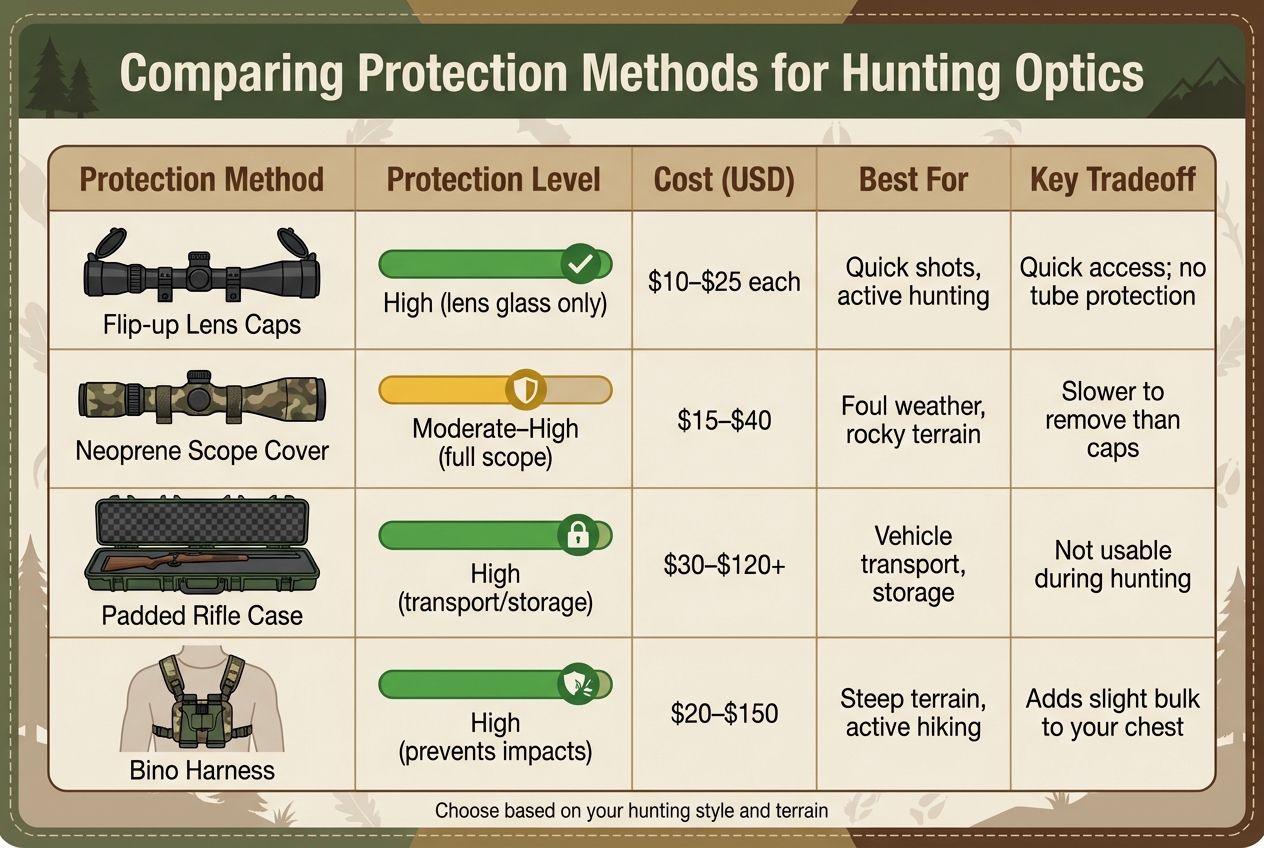
Hunting Optics Protection Methods Comparison Chart
Once your gear is clean and properly stored, it might be time to think about upgrading with accessories designed to protect and enhance your equipment.
Protective Accessories Worth Considering
Flip-up lens caps are a great way to shield your lenses while keeping them easily accessible. These typically cost between $10 and $25 each. To ensure a proper fit, consult the provided fit charts.
Neoprene scope covers completely enclose your scope, offering cushioning against impacts and protection from the elements. Priced around $15 to $40, these covers are especially useful for backcountry hunts where you have time to prepare your shot. However, they can be slower to remove compared to flip-up caps.
Padded cases are essential for safeguarding your optics during transport and storage. Soft cases generally range from $30 to $120, while hard cases, which provide more rugged protection, can cost between $80 and $250. These are ideal for ensuring your gear stays safe while on the move.
Features That Boost Durability
When upgrading your optics, prioritize models with multi-layer, scratch-resistant coatings to reduce glare and withstand abrasions. Opt for optics with recessed lenses, which help shield against branches and rocks. Waterproof designs with O-ring seals and interiors purged with nitrogen or argon are invaluable for keeping moisture out and preventing fogging in wet conditions.
Check that adjustment turrets are sturdy and that ocular locking rings fit securely to maintain alignment, even under recoil. Optics constructed from aircraft-grade aluminum tubes are more resistant to drops and rough handling, making them a reliable choice for rugged environments.
Comparing Protection Methods
Here’s a quick comparison of different protective methods to help you decide what suits your hunting needs best:
| Protection Method | Protection Level | Cost (USD) | Best For | Key Tradeoff |
|---|---|---|---|---|
| Flip-up lens caps | High (lens glass only) | $10–$25 each | Quick shots, active hunting | Quick access; no tube protection |
| Neoprene scope cover | Moderate–high (full scope) | $15–$40 | Foul weather, rocky terrain | Slower to remove than caps |
| Padded rifle case | High (transport/storage) | $30–$120+ | Vehicle transport, storage | Not usable during hunting |
| Bino harness | High (prevents impacts) | $20–$150 | Steep terrain, active hiking | Adds slight bulk to your chest |
For tailored advice on scopes, binoculars, and other protective gear that align with your style and budget, visit Scope It Outdoors for expert reviews and comparisons.
Conclusion
Taking care of your optics is all about building consistent habits before, during, and after your hunt. Start by reviewing a pre-hunt checklist to ensure your optics, gear, and transport are secured. While in the field, keep lens caps closed when you’re on the move, use padded rests to avoid hard surface contact, and handle your rifle carefully to prevent scope impacts. After the hunt, make it a point to clean and inspect your optics for any signs of damage.
Proper storage is just as important as field care. Store your optics with lens caps on in a cool, dry place, and in humid areas, consider adding desiccant packs to protect seals and coatings. To keep your gear in top shape, invest in quality protective accessories like flip-up caps, neoprene covers, and hard cases. When upgrading your equipment, look for optics with features like scratch-resistant, multi-coated lenses, waterproof construction, and durable housings that can handle recoil and rough conditions. Well-maintained optics not only improve target identification and shot placement – especially in low-light situations – but also help you avoid costly repairs or replacements.
Need help finding the right setup? Check out Scope It Outdoors for expert reviews on scopes, binoculars, and protective gear designed for hunting. Keep this checklist handy and review it before each hunt to make sure your optics stay clear and reliable.
FAQs
What’s the best way to protect my hunting optics from scratches during transport?
To protect your hunting optics from scratches while traveling, always use protective lens covers or a sturdy case. Opt for a padded hard-shell container to guard against accidental bumps and impacts. Keep your optics away from rough or abrasive surfaces, and secure them properly within your gear to minimize movement. Handle them gently to maintain their quality and ensure they’re ready for your next outdoor adventure.
What are the best tools for cleaning and protecting my hunting optics in the field?
To maintain your hunting optics in excellent shape, start by using a soft, lint-free microfiber cloth along with a lens cleaning solution specifically designed for optics. Before you wipe the lens, gently remove any dust or debris with a blower brush or air blower to prevent scratches. Steer clear of household cleaners or abrasive materials, as they can harm the lens coatings. Taking these steps will help keep your optics clear and dependable for all your outdoor adventures.
What’s the best way to store my hunting optics to prevent damage?
To keep your hunting optics in top condition and extend their lifespan, always store them in a clean, dry, and padded case. Protect the lenses with caps when they’re not in use to prevent scratches, and avoid placing heavy items on top of them. It’s also important to store your optics in a temperature-controlled space, steering clear of extreme heat, cold, or high humidity, as these can lead to long-term damage. Make it a habit to inspect and gently clean the lenses with a soft, lint-free cloth to preserve their clarity and performance.