
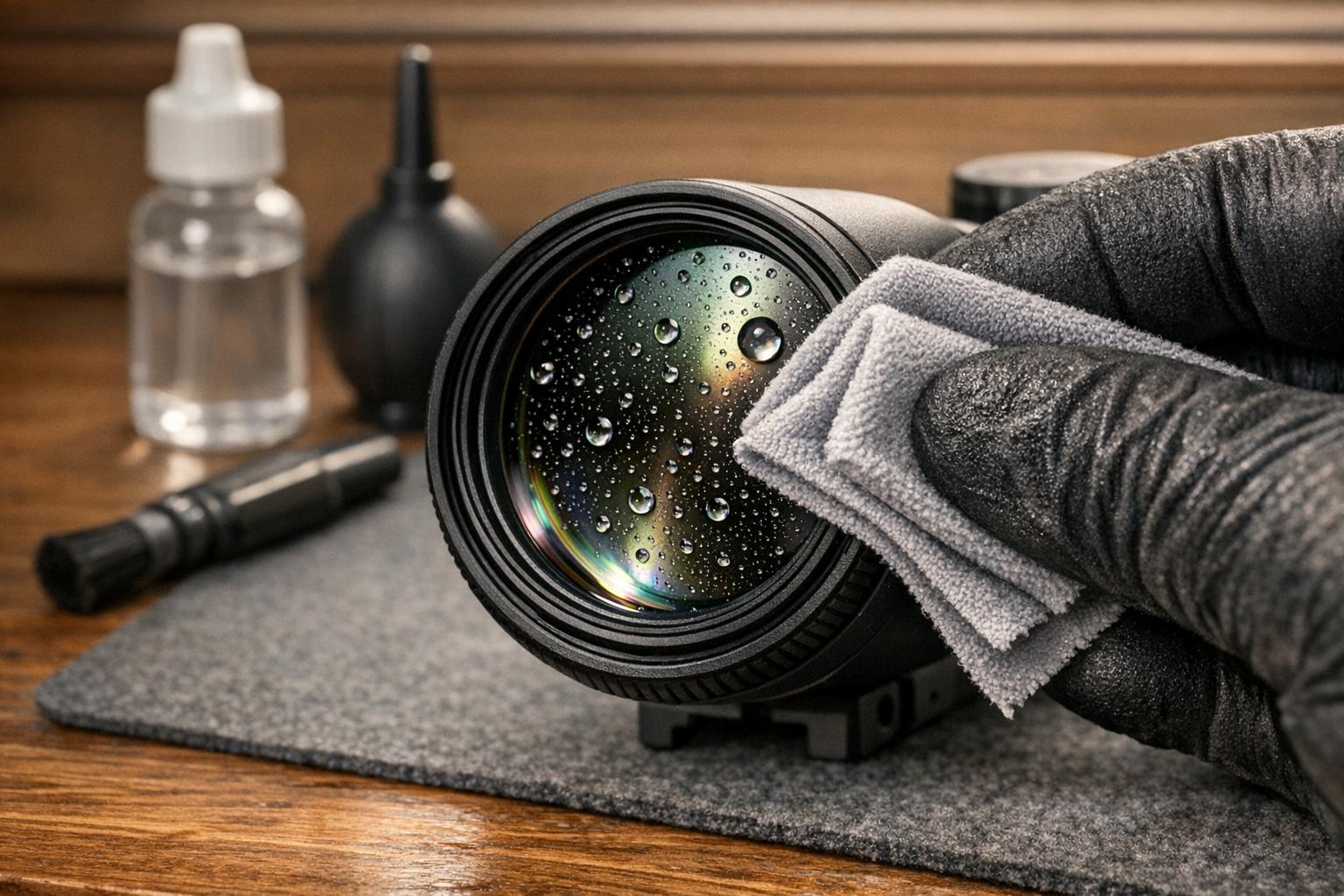
Cleaning wet rifle scope lenses requires careful handling to avoid permanent damage to the glass and its coatings. Improper methods can lead to scratches, stripped coatings, and compromised seals, which reduce clarity and performance. Here’s a quick summary of the best practices:
- Tools You Need: Use a compressed air blower, soft-bristle lens brush, microfiber cloth, or LensPen. Avoid paper towels, clothing, or cotton swabs.
- Safe Cleaning Solutions: Opt for 90%+ isopropyl alcohol, lens-safe cleaners, or mild soapy water. Never use household cleaners or gun solvents.
- Cleaning Process:
- Blow off loose debris with a rubber bulb blower.
- Rinse heavy grime with warm, soapy water.
- Wipe gently with a damp microfiber cloth in a spiral motion.
- Dry and polish with a clean microfiber cloth.
Key Mistakes to Avoid:
- Don’t touch lenses with your fingers.
- Never spray liquid directly on the lens.
- Avoid using abrasive fabrics or household cleaners.
Preventative Tips:
- Use lens covers to shield against moisture and debris.
- Store your scope in a dry, moisture-controlled environment.
- Apply water-repellent coatings to reduce fogging and dirt buildup.
How to Clean a Rifle Scope Lens | Hunting Mark

sbb-itb-31b92c7
Tools and Materials You Need
Using the right cleaning supplies is essential to protect your lens coatings and avoid permanent damage. While it may be tempting to reach for household items, they can scratch the glass, strip coatings, and reduce your equipment’s performance over time.
Cleaning Tools You Should Use
Start with a compressed air blower, like a hand-operated rubber bulb or squeeze bulb. These tools safely remove loose debris without the high pressure of industrial compressors, which can damage seals. Pair this with a soft-bristle lens brush to gently sweep away remaining particles.
For wiping, stick to lint-free microfiber cloths or pre-treated optics wipes. These materials effectively remove oils and particles without scratching the lens. Avoid paper towels, facial tissues, or clothing, as they can trap abrasive dust. As Vortex Optics puts it: "Your T-shirt is NOT an optics grade cloth." Even seemingly soft fabrics can degrade clarity by dragging tiny particles across the lens surface.
LensPens are another great option, combining a retractable brush with a carbon-infused cleaning pad to tackle smudges and oils. For tight spaces around turrets or threads, use Q-tips wrapped in microfiber. Bare cotton swabs should be avoided, as they tend to leave fibers behind.
When it comes to cleaning solutions, choose safe options like 90%+ isopropyl alcohol, manufacturer-recommended lens cleaners, or generic eyeglass cleaners. For heavily soiled lenses, rinse gently with warm, soapy water using mild dish soap before wiping. Stay away from harsh chemicals like Windex, gun solvents, or CLP, as they can strip coatings and damage seals.
Why Quality Materials Matter
Choosing high-quality materials makes a big difference in maintaining your optics.
Specialized cleaning tools are designed with delicate lens coatings in mind. For example, microfiber cloths trap particles within their fibers, preventing them from being dragged across the glass. Standard fabrics, on the other hand, can act like sandpaper, especially when dirt is present.
The chemical makeup of your cleaning solution is just as important. Many household cleaners contain ammonia or other harsh agents that can erode anti-reflective and hydrophobic coatings. Optics-grade solutions, however, are pH-balanced to preserve the protective properties of multi-coated glass. Using unsuitable products, such as gun oils or solvents, can reduce the lens’s water-repellent qualities, leading to more fogging during use.
Finally, never wipe a dirty lens with a dry cloth without first removing loose debris. This practice can create a "sandpaper effect", where dirt acts as an abrasive, damaging the glass. By investing in the right materials and following the proper cleaning process, you can protect your equipment and ensure your scope performs at its best.
How to Clean Wet Scope Lenses
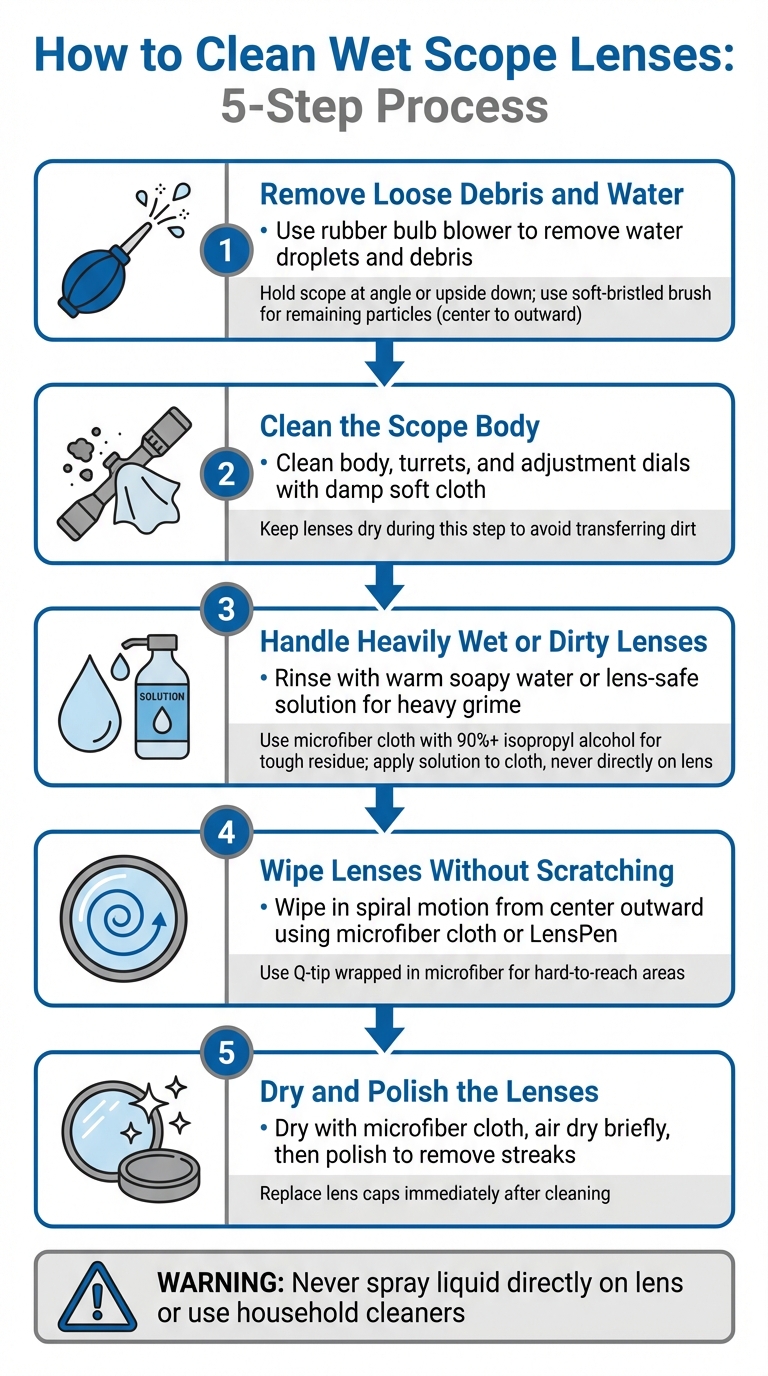
5-Step Process for Cleaning Wet Rifle Scope Lenses Safely
Cleaning wet scope lenses requires care to avoid scratching the glass or damaging the coatings. Follow these steps to restore clarity while protecting the delicate surfaces.
Step 1: Remove Loose Debris and Water
Start by using a hand-operated rubber bulb blower to gently remove water droplets and debris without touching the glass. Hold the scope at an angle or upside down to stop debris from settling around the lens edges. If any particles remain, use a soft-bristled lens brush, moving from the center of the lens outward.
Step 2: Clean the Scope Body
Before focusing on the lenses, clean the scope body, turrets, and adjustment dials with a damp, soft cloth or a soft-bristled toothbrush. Be careful to keep the lenses dry during this step to avoid transferring dirt or oils onto the glass.
Step 3: Handle Heavily Wet or Dirty Lenses
If the lenses have mud or heavy grime, rinse them with warm, soapy water or a lens-safe cleaning solution to loosen debris. For tougher substances like tree sap or powder residue, use a microfiber cloth dampened with 90%+ isopropyl alcohol. This evaporates quickly, reducing water spots. Always apply the cleaning solution to the cloth – never directly onto the lens – to avoid liquid seeping into the scope’s seals.
Step 4: Wipe Lenses Without Scratching
Use a clean microfiber cloth or a LensPen to wipe the lens in a spiral motion, starting at the center and working outward. This pushes debris toward the edges rather than spreading it across the glass. For hard-to-reach areas near the lens housing, wrap a Q-tip in microfiber to clean corners without leaving fibers behind.
Step 5: Dry and Polish the Lenses
After cleaning, dry the lens with a microfiber cloth, let it air dry briefly, and then polish to remove any streaks. Once finished, protect the lenses by immediately replacing the lens caps.
Mistakes That Damage Lenses
Once you’ve nailed the proper cleaning techniques, it’s equally important to steer clear of common mistakes that can permanently damage your scope. Some cleaning habits can wreak havoc on the delicate coatings of your lens.
Don’t Use Household Cleaners
Household glass cleaners and gun solvents like CLP might seem harmless, but they can actually ruin your scope. These products can strip away anti-reflective and hydrophobic coatings and even compromise waterproof seals. Jack Johnson from Gunnr puts it plainly:
Household cleaners are a no-go because they can strip coatings and damage your scope lens
. Instead, stick to optics-grade cleaners or high-purity isopropyl alcohol (90% or more). These options evaporate quickly, leaving no residue and preserving your lens’s protective layers.
Don’t Touch Lenses with Your Fingers
Your fingers may seem harmless, but the oils on your skin can smear the lens and attract dust. Over time, this buildup can lead to scratches and reduced clarity. Even a quick touch can leave residues that are tough to clean. Always handle your scope by the body or turrets to keep those lenses pristine and your cleaning efforts effective.
Don’t Submerge the Scope in Water
Even if your scope is water-resistant, immersion is risky. Spraying cleaning fluid directly onto the lenses or submerging the scope can push liquid past the seals, causing internal fogging, corrosion, or even fungus growth. Cameron Porter from Hunting Mark warns:
If that little tiny bit of cleaner does get in your lens, your lens is damaged because it shouldn’t be letting just about anything in at all
. Salt water is even worse – Matthew Duclos highlights that submerging a scope in salt water often results in irreparable damage. If your scope takes an accidental plunge, especially in salt water, rinse it with fresh water immediately and consult the manufacturer for a professional checkup.
Avoiding these pitfalls is just as essential as proper cleaning when it comes to keeping your scope in top condition.
How to Prevent Wet Lenses
Keeping your scope’s lenses dry is crucial for maintaining optimal performance. By adopting a few smart habits, you can protect your scope’s delicate coatings and ensure it’s ready for every hunt. These preventive measures, combined with proper cleaning, extend the life of your optics.
Use Lens Covers
Lens covers, whether flip-caps or standard types, are your best defense against rain, snow, mud, and water splashes. Keep them closed during transport to block moisture and debris. Flip-style caps are especially handy since they let you access your scope quickly while keeping the lenses sealed until the moment you need them. Beyond protecting the glass, lens covers also shield waterproof seals and coatings from exposure to harsh gun cleaning solvents. As Leupold Staff advises:
We recommend always using lens covers to help keep dust and other debris off the glass
.
However, it’s important to dry your scope completely before covering it for long-term storage. Trapped moisture can lead to internal corrosion or even fungus growth.
Store Your Scope Properly
Once your lenses are covered, proper storage adds another layer of moisture protection. Always make sure your scope is completely dry before storing it to prevent rust on turrets and dials. If you’ve been hunting in wet conditions, leave the turret caps off temporarily to let the adjustment mechanisms dry thoroughly. For long-term storage, place your dry scope in a moisture-controlled environment, such as a padded, sealed case. Adding silica gel packs or using a dehumidifier can help absorb any lingering moisture. If your scope uses batteries for illumination or night vision, remove them to avoid potential corrosion.
Apply Water-Repellent Coatings
Hydrophobic coatings are a great way to keep water from accumulating on your lenses. These coatings cause water to bead up and roll off, ensuring a clear view even in damp conditions. They also help reduce fogging caused by sudden temperature or humidity changes and make it harder for dirt and oils to stick to the glass, cutting down on frequent deep cleaning. Before applying the coating, use compressed air or a soft brush to remove loose particles from the lens. Apply the coating with a microfiber cloth in a gentle spiral motion – never directly on the lens itself. Let the lens air dry completely after application. Even with these coatings, it’s still a good idea to use flip-up caps during transport for added protection.
Conclusion
Keeping wet scope lenses clean doesn’t have to be complicated. Start by gently removing any debris with a soft brush or compressed air. Then, use a microfiber cloth lightly dampened with 90%+ isopropyl alcohol to wipe the lens. As Cameron Porter from Hunting Mark emphasizes:
Minimum necessary force… Only clean it as much as you need to to get a clear sight picture.
This approach helps protect the lens coatings and ensures your optics last longer.
Taking care of your scope goes beyond cleaning. Preventive steps like using lens covers, storing the scope properly, and applying water-repellent coatings can reduce how often cleaning is needed and help avoid potential damage. Addressing moisture quickly can also stop water spots and residue from forming, keeping your lenses in top condition.
FAQs
Can water spots permanently damage a scope lens?
Water spots, if addressed promptly and correctly, usually don’t leave lasting damage. However, neglecting them can result in surface stains or the slow breakdown of your lens coating. To ensure your scope stays in top condition and lasts longer, regular upkeep is essential.
What should I do if water gets inside my scope?
If water seeps into your scope, carefully wipe away the moisture with a soft, lint-free cloth. Make sure the scope is thoroughly dry before putting it away to avoid any damage or fogging issues. Stick to proper cleaning and maintenance routines to keep your equipment in good condition.
How can I tell if my lens coating is damaged?
When examining your scope, look for visible signs of wear like scratches, peeling, or discoloration on the lens surface. Damage to the lens can lead to reduced contrast, increased glare, or unwanted reflections, which may affect your viewing experience. Lens coatings are designed to boost performance and shield the lens, but they can wear down over time or suffer from improper cleaning methods. To keep your scope in top condition, inspect your lenses regularly and address any issues promptly.