
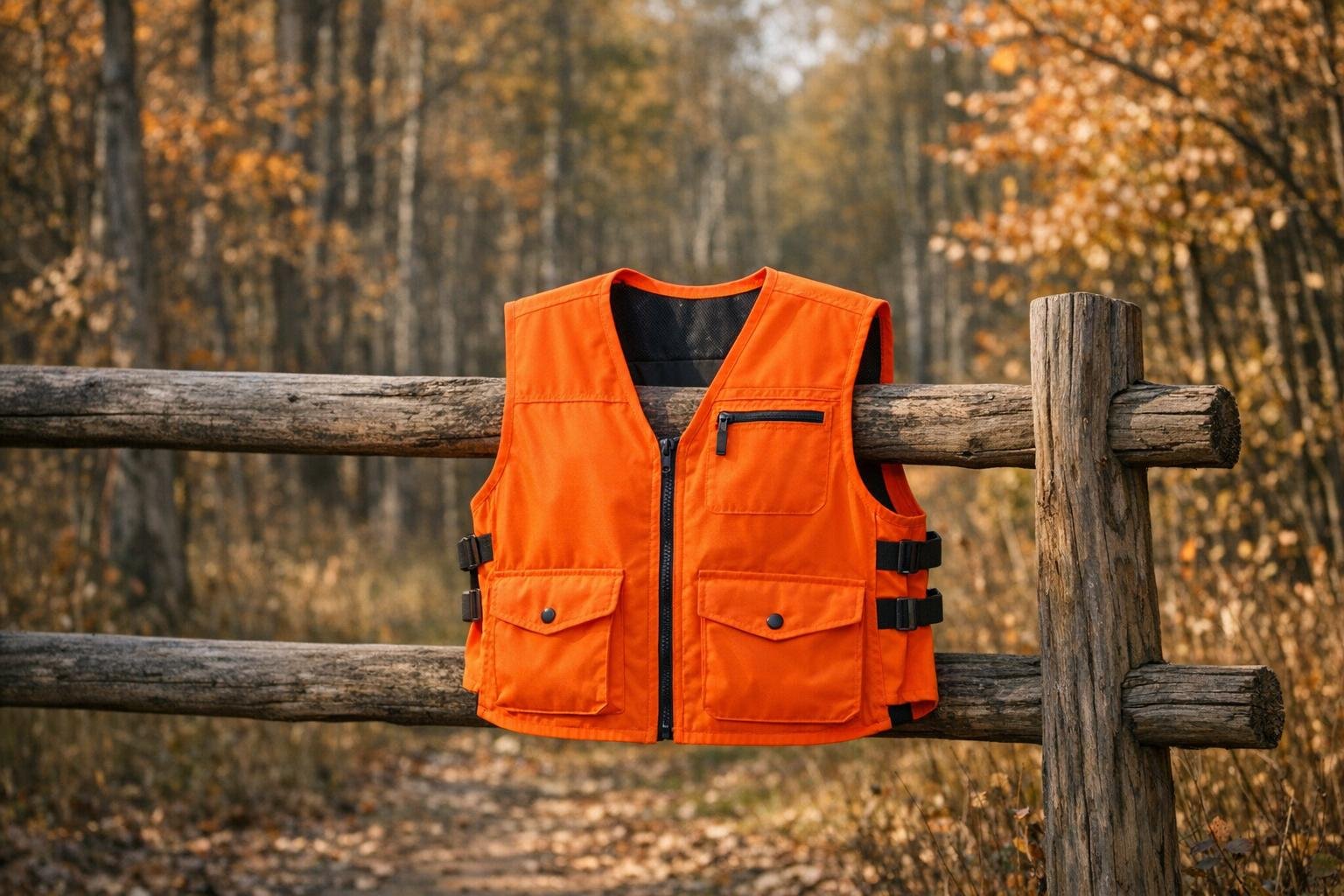
Hunting safety vests are a must-have for visibility, legal compliance, and functionality. Whether you’re trekking through dense woods or open fields, the right vest can enhance your safety and gear organization. Here’s what to look for:
- High Visibility: Blaze orange fabric ensures you’re visible to others while remaining undetected by deer. Look for retroreflective accents for low-light conditions.
- Legal Compliance: State laws vary, often requiring 250–400 square inches of blaze orange for big game hunting. Double-check your local regulations.
- Gear Storage: Elastic loops, zippered pockets, and hydration compartments make carrying essentials like ammo, GPS devices, and water easier.
- Durability: Materials like polyester, waxed cotton, or ballistic nylon resist wear and weather. Reinforced stitching and water-repellent coatings are key for longevity.
- Comfort and Fit: Adjustable straps, lumbar belts, and breathable designs prevent fatigue and allow free movement, even with layers or bulky gear.
The right vest combines safety, practicality, and comfort to meet your needs in the field. Read on for detailed insights into each feature.
High Visibility and Safety Compliance
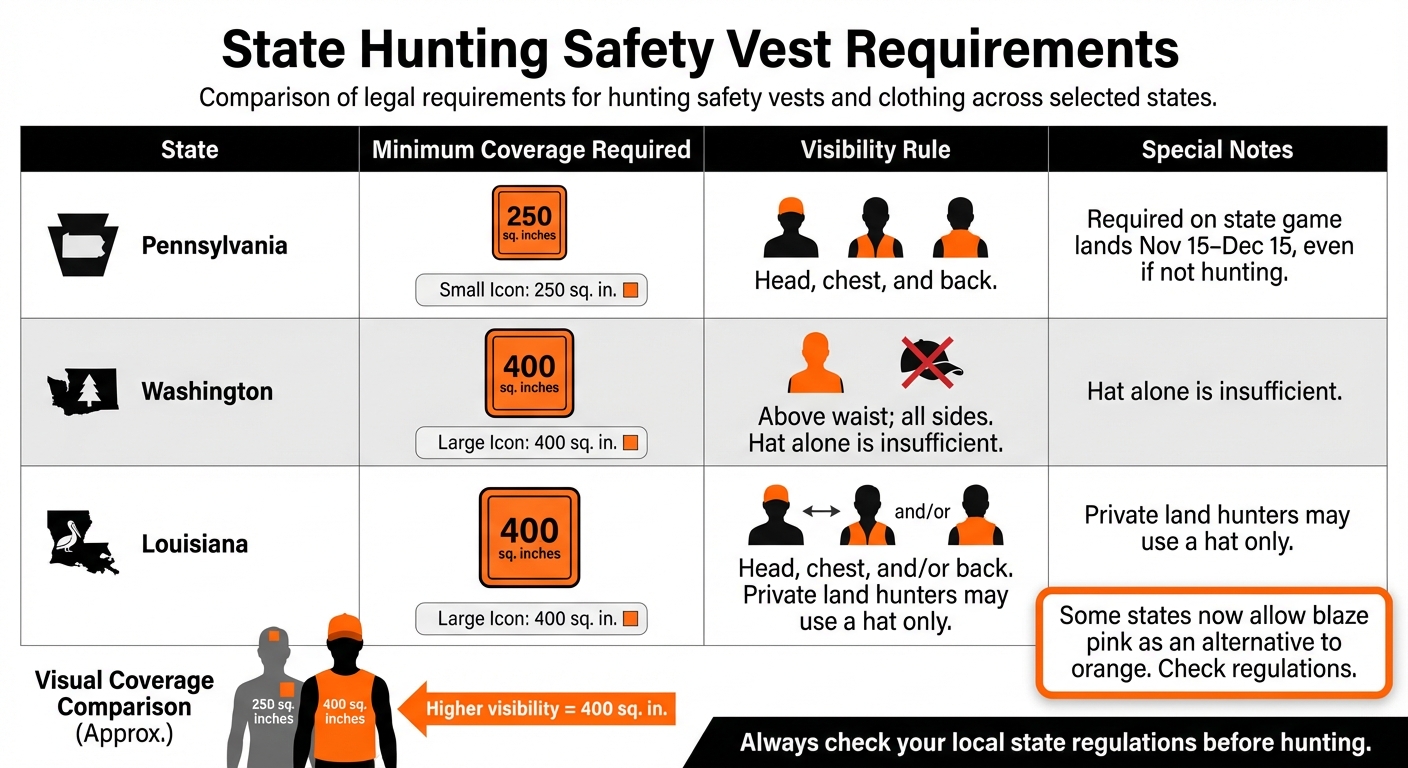
State-by-State Hunting Safety Vest Requirements Comparison
A good vest is more than just gear – it’s a lifesaver. Blaze orange stands out because it’s a color you won’t find in nature, making it an unmistakable signal that someone is nearby. As Wade Lubowitz puts it:
"Blaze orange… is a fluorescent color specifically designed to be highly visible to humans – especially in wooded or low-light conditions. It’s not found in nature, making it incredibly effective at helping other hunters see you in the field."
Here’s what to focus on when choosing a vest that prioritizes visibility and meets safety standards.
Key Visibility Features
For maximum safety, go for vests with full blaze orange coverage on both the chest and back. Make sure the material is fluorescent, not just bright orange, so it meets legal standards and enhances visibility in dim lighting. Retroreflective accents are another smart addition – they can improve visibility by up to 15% during low-light times like dawn and dusk.
The vest should fit comfortably over bulky winter layers without obscuring the required orange areas. If you’re carrying a backpack, ensure the vest extends far enough to remain visible from behind. You can also add extra orange to your pack for added safety.
Meeting Legal Requirements
Visibility isn’t just about design – it’s also about following the law. State regulations differ widely, so check the rules in your area before making a purchase. For instance, Pennsylvania requires at least 250 square inches of fluorescent orange visible from all sides, while states like Washington, Michigan, and Louisiana require 400 square inches. In most states, wearing just a hat won’t cut it; you’ll need both a vest and headwear to ensure full 360-degree visibility.
| State | Minimum Coverage | Visibility Rule | Special Notes |
|---|---|---|---|
| Pennsylvania | 250 sq. inches | Head, chest, and back | Required on state game lands Nov 15–Dec 15, even if not hunting |
| Washington | 400 sq. inches | Above waist; all sides | Hat alone is insufficient |
| Louisiana | 400 sq. inches | Head, chest, and/or back | Private land hunters may use a hat only |
Some states now allow blaze pink as an alternative to orange. Louisiana, for example, has seen a noticeable decrease in hunting-related accidents since introducing mandatory orange and pink requirements. If you’re hunting from an enclosed blind in Pennsylvania, don’t forget to display an additional 100 square inches of orange within 15 feet of your location to alert others passing by.
Gear Storage and Organization
When you’re out in the field, having your gear well-organized isn’t just convenient – it can make all the difference in your performance. A hunting vest isn’t merely about visibility; it’s about keeping your essentials within reach while freeing up your hands for the task at hand. As Orvis puts it:
"A well-designed upland hunting vest can carry it all within easy reach, allowing you to spend more time focused on hunting."
Storage Features to Consider
Let’s start with ammunition. Look for vests with elastic shell loops that allow quick access to 10–15 rounds. If you’re carrying a larger amount of ammo, cargo-style "dump" pockets with zippers might be a better fit. Some specialized upland vests even provide loops for up to 24 rounds of 12- or 20-gauge ammunition.
For storing game, front-loading bags are an excellent choice. They make it easy to stow small game without awkward movements. High-end vests often accommodate up to three pheasants and come with features like blood-proof linings or mesh fabric to keep the game cool while you’re on the move.
Hydration is another critical consideration. Look for vests with internal mesh pouches, external bottle holders, or rear pouches designed for hydration systems. Positioning water storage in the lumbar area helps maintain balance and reduces bouncing during movement.
To secure smaller essentials, zippered security pockets are a must. Deep slash pockets are great for GPS devices like Garmin Alphas, while narrower compartments are ideal for knives, multi-tools, or shears.
Finally, think about how the vest’s storage capacity affects its overall bulk and weight distribution.
Balancing Capacity and Bulk
More storage doesn’t always mean better functionality. In dense cover, such as during grouse or woodcock hunts, "grouse pockets" that sit higher and flatter on your body are less likely to snag on branches. On the other hand, if you’re hunting in open terrain, vests with longer, high-capacity shell pockets might be a better match.
Weight distribution is equally important. Vests with waist-loading designs transfer up to 75% of the weight to your hips, which helps reduce fatigue and keeps your gun mount unhindered.
To avoid turning your vest into an unmanageable mess, organize smaller items in zip-lock bags. This simple system lets you adjust on the go and prevents clutter. As WingWorks advises:
"When we forget something for a hunt it’s often something we took off the vest and never put back… consider leaving a lot of things in or attached to the vest so in the confusion of leaving home they aren’t forgotten."
Price: Entry-level options start at $40.99, mid-range vests are around $198.00, and premium models can exceed $298.00.
Durability and Weather Protection
When choosing a vest for field use, durability and weather protection are non-negotiable. A good vest needs to handle tough environments and heavy use without compromising performance.
Durable Fabric and Construction
The type of fabric plays a big role in how well your vest holds up. In wet conditions, 100% polyester is a reliable choice due to its water-resistant properties. For upland hunting, materials like waxed cotton or heavy-duty canvas are great for resisting snags from thorns or briars. If mobility and abrasion resistance are priorities, nylon/spandex blends are worth considering. For the most rugged terrain, vests made with ballistic nylon (1000-denier) or Cordura provide exceptional durability.
Construction quality matters just as much as material. Reinforced stitching, bar-tacking at stress points, and heavy-duty zippers (like YKK® zippers) ensure your vest won’t fail under pressure. As Gamehide notes:
"I feel bar-tacking is the most important feature in a well-built item of hunting clothing."
These construction details set the stage for weather-resistant features that keep you comfortable in challenging conditions.
Weather-Resistant Features
A DWR (Durable Water Repellent) coating on the outer shell is essential for keeping water at bay. Look for vests with water-repellency ratings between 5,000–10,000 mm, which are effective against light rain and prevent the fabric from becoming heavy and waterlogged.
For cold-weather or late-season hunts, windproofing is equally important. Fabrics with tightly woven designs or technical membranes like Supraflex™ or Toray Delfy™ softshell can block up to 90% of wind, helping you retain body heat in exposed or high-altitude environments. In temperatures below 35°F, vests with micro-fleece or brushed tricot linings deliver warmth without adding unnecessary bulk.
Breathability is another key factor. Vests with breathability ratings between 5,000–10,000 g/m²/24h wick moisture away from your body, preventing the chill that can set in after intense activity. This balance of breathability and weather resistance ensures comfort throughout your hunt.
Price ranges: Basic safety vests are budget-friendly, priced between $17.99–$28.98. For more advanced technical vests, expect to pay $90.00–$155.00, while premium models with top-tier performance features can cost between $179.00–$298.00.
sbb-itb-31b92c7
Fit, Comfort, and Mobility
A poorly fitting vest can seriously impact your performance in the field. Whether you’re mounting a shotgun, drawing back a bow, or scanning the horizon with binoculars, your vest should feel like a seamless part of your body – not a bulky, restrictive layer.
Adjustability and Ergonomic Design
The best vests borrow features from technical hiking gear, offering a fit that works with your movements. Look for adjustable side and shoulder straps that can accommodate anything from light clothing to heavier layers. This flexibility can improve your range of motion by up to 40°.
For managing weight, lumbar belts or backpack-style pads are game-changers. These features help shift the load to your hips, reducing fatigue and keeping you comfortable during long outings. The Final Rise Summit XT is often praised for its load-bearing design, which fully transfers weight to the hips. Similarly, the Orvis PRO LT stands out for its lightweight ballistic nylon material and redesigned straps, which allow for an unobstructed gun mount.
Shoulder design is another key factor. Slim, well-contoured shoulder straps are essential to avoid interference when handling a firearm or bow. Always test your shooting motion while trying on a vest to ensure padding doesn’t get in the way. As Beretta aptly states:
"Mobility and comfort can make or break your hunting experience. The right vest should move with you, not restrict you".
Once you’ve nailed the fit and ergonomics, proper ventilation will keep you comfortable no matter the season.
Ventilation for Different Seasons
Staying comfortable during a hunt means managing temperature effectively. Just as adjustability improves mobility, good ventilation keeps you cool and dry. Mesh panels and pit zips are essential for warm-weather hunts, boosting airflow by 20% and reducing sweat buildup by 25% compared to standard jackets. Strategic placement of mesh panels along the sides or back can significantly minimize heat retention.
For colder conditions, choose a vest that works with your layering system. Lightweight strap vests (200–300 gsm) are ideal for mild weather, offering excellent mobility. On the other hand, insulated softshell or waxed cotton vests are better suited for temperatures dipping below 35°F. A simple fitting tip: ensure there’s enough room – about two fingers’ width – when wearing the vest over your thickest layers. This ensures comfort and flexibility, even in frosty conditions.
Attachment Points and Customization
When it comes to functional storage and organization, smart attachment systems can make all the difference in the field. A well-thought-out attachment setup can turn a basic vest into a fully equipped hub for your gear. For example, MOLLE webbing provides a secure way to attach specialized pouches for gear like GPS units, rangefinders, or additional magazine and shell holders. D-rings on shoulder straps or the harness base are perfect for securing lanyards for items such as cameras, whistles, or other electronics you need within reach.
Customizable Features
Modern hunting vests come with a variety of customization options to help you carry your essentials efficiently. Webbing loops allow you to position collar transmitters at the right height for a strong signal. Velcro fields offer a spot for removable shotshell strips or patches, while elastic loops keep shooting sticks and shells organized within larger pockets. Some vests even go a step further, featuring integrated holsters or MOLLE bases on pocket flaps. This design allows for the addition of accessories like the Marsupial Gear Bottom Mount Holster ($50.00) or the Marsupial Gear Rangefinder Pouch ($42.00).
Hydration routing clips on shoulder straps let you run drinking tubes from a reservoir on your back to the front, giving you hands-free access to water. When setting up your attachments, aim for a layout that matches your hunting style. The goal is to stay prepared without adding unnecessary weight or bulk to your vest.
Balancing Simplicity and Complexity
Choosing between minimalist and modular designs often comes down to your specific needs. Simple vests with fixed pockets are lightweight and sleek, making them ideal for navigating dense cover like aspen saplings. On the other hand, modular vests give you the flexibility to swap out pouches for different scenarios but can feel heavier and bulkier due to extra webbing and hardware. A good compromise is the Dove Gear "The Ultimate Bird Vest" ($79.95), which has earned a 4.84 out of 5-star rating from 143 reviews. It strikes a balance by accommodating essentials like water bottles and phone holders without becoming overly cumbersome.
To keep your setup efficient, organize your gear in zip-lock bags tailored to specific hunts – whether for upland birds, turkey, or waterfowl. Only attach what you need for the day. If you’re using modular holsters, consider mounting them cross-draw style on your off-side. This keeps your shooting shoulder free for quick access and safe gun placement. In thick brush, reducing your profile by removing bulky pouches and water holsters can trim up to 6 inches of extra bulk.
Conclusion
Choosing the right hunting vest boils down to five essential features that prioritize safety and efficiency. High visibility, often achieved with blaze orange fabric, ensures you’re 95% visible in dense forests and can lower the risk of accidental shootings by 20%. Gear storage is another critical factor, offering organized compartments for ammunition, GPS devices, and calls, so everything you need is within easy reach. For long-term use, durability is key – vests made from tough, weather-resistant materials can handle thorns, brush, and harsh conditions season after season.
A well-designed vest also emphasizes comfort and fit. Adjustable straps and lumbar support pads help shift weight to your hips, reducing shoulder strain and keeping you energized on extended hunts. Lastly, customization options like MOLLE webbing and detachable pouches allow you to tailor your vest for specific game and hunting styles, whether you’re after upland birds, turkeys, or waterfowl. Together, these features ensure you’re both prepared and compliant in the field.
"The best vest seamlessly integrates with your body while delivering exactly what you need at the critical moment." – Jessica Williams, Tactical Expert
Don’t forget to check your state’s blaze orange requirements – most call for 400 to 500 square inches for big game and upland hunting. It’s also a good idea to try on vests with your typical hunting layers to ensure a proper fit and full range of motion.
For expert guidance and tailored recommendations, visit Scope It Outdoors.
FAQs
What are the blaze orange requirements for hunters in the U.S.?
Blaze orange, often called "hunter orange", is a safety staple for firearm big-game hunting in most U.S. states. Generally, hunters are required to wear 400–500 square inches of solid, non-camouflage orange on their upper body, along with an orange hat or cap that’s visible from all angles. Some states, like Alabama, have more lenient rules, requiring just 144 square inches of orange above the waist or an orange hat, with exceptions for elevated stands.
Certain types of hunts, such as archery-only, turkey, or waterfowl hunts, often don’t require blaze orange. Additionally, exemptions may apply for hunting on private land or from elevated positions. Even in states without blaze orange mandates, like California or Idaho, wearing it is highly recommended to enhance safety.
Since regulations can vary and change yearly, it’s crucial to check your state’s current requirements before heading out. Investing in a reliable hunting safety vest with plenty of orange coverage is a practical way to stay visible and compliant in the field.
How can I make sure my hunting vest fits well over winter clothing?
To make sure your hunting vest fits comfortably over your winter layers, start by focusing on the thickest clothing you’ll wear, like a fleece or insulated jacket. Pick a vest size that leaves about 2–3 inches of extra space around your chest and shoulders, giving you the freedom to move without feeling restricted. When you try it on, wear your winter layers to ensure the vest fits snugly without being too tight or awkwardly bulky.
Use the straps or closures to adjust the fit, so it stays secure but doesn’t hinder your movement. Test how it feels by raising your arms, crouching, and walking through brush – this will help you spot any issues with mobility or snagging. A well-fitted vest will keep you comfortable and ready for action during those cold-weather hunts.
What key features should I consider in a hunting safety vest for gear storage?
When choosing a hunting safety vest, focus on toughness and practicality. Opt for materials like water-resistant ripstop nylon or heavy-duty canvas with reinforced stitching to handle rugged environments. Plenty of storage is a must – look for vests with a mix of zippered and open pockets, MOLLE loops for attaching gear, and specific compartments for items like ammo and calls. Silent closures, such as magnetic snaps or quiet zippers, are ideal for staying undetected in the field. Lastly, make sure the vest features adjustable straps to provide a snug and comfortable fit, even during extended hunts.