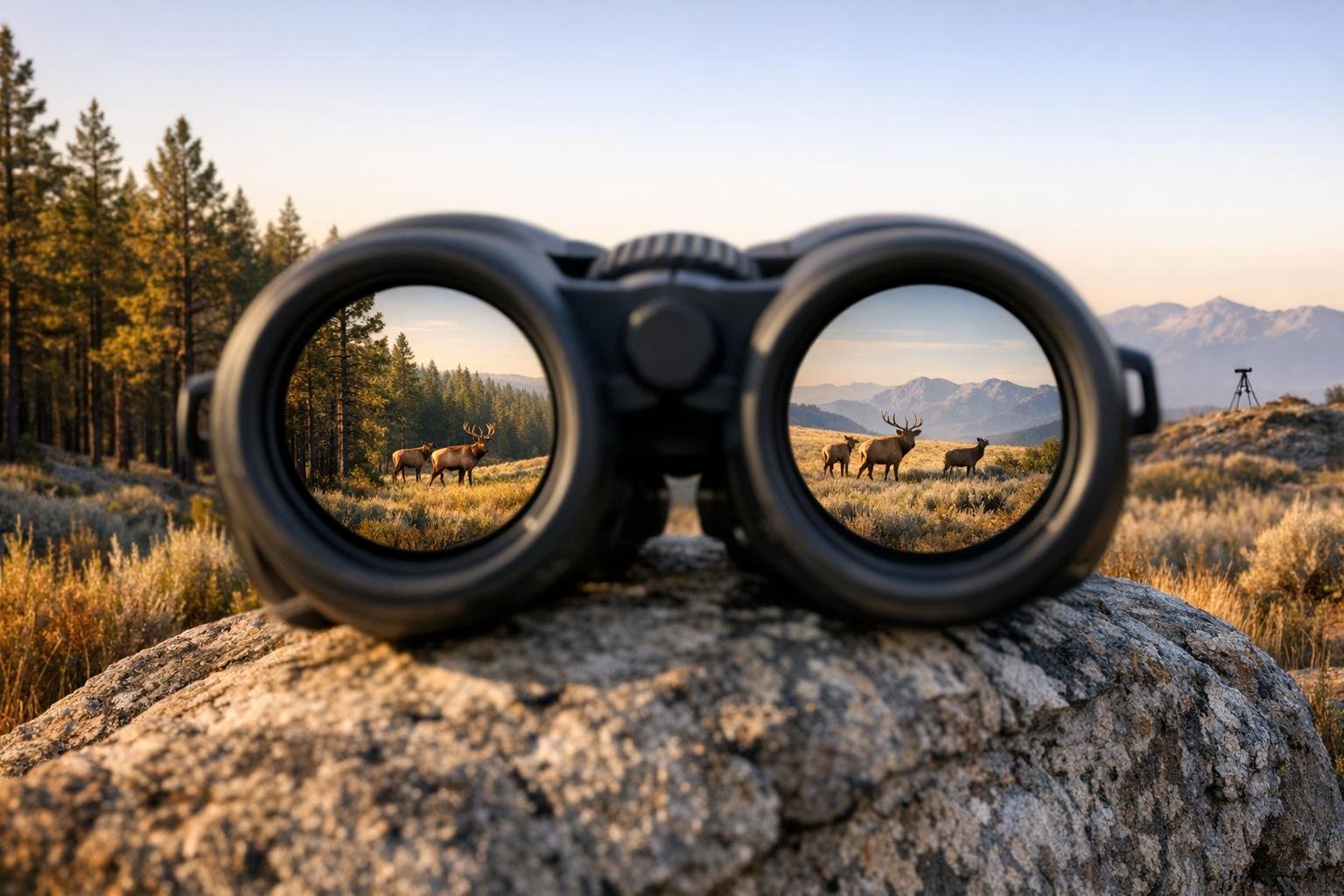
When choosing binoculars for hunting, magnification and field of view (FOV) are critical factors. Magnification determines how close objects appear, while FOV is the width of the visible area. Higher magnification provides detailed views but narrows the FOV and amplifies hand tremors. A wider FOV helps track moving game, especially in dense forests.
- For dense woods: Use 8×42 binoculars for a steadier image and broader FOV, ideal for spotting game at close range.
- For open plains: Opt for 10×42 binoculars to see fine details over long distances.
- For mountains/long-range: Consider 12× or 15× models for distant targets but expect to use a tripod for stability.
Top picks include the Zeiss SFL 10×40 (lightweight with excellent clarity), Nikon Monarch M7 10×42 (great FOV), and Leupold BX-5 Santiam HD 10×42 (durable for rugged conditions). Each model balances these specs differently, so your choice should match your hunting terrain and style.
How To Select the Best Binocular For Your Hunt – The Experience Project [EXP003]
sbb-itb-31b92c7
Best Binoculars for Hunting: Top Models Reviewed
When it comes to hunting, finding binoculars that strike the right balance between magnification and field of view (FOV) is key. Below are some top-performing models, all with 10x magnification, but varying in features like weight, optical clarity, and overall usability in different hunting environments.
Zeiss SFL 10×40
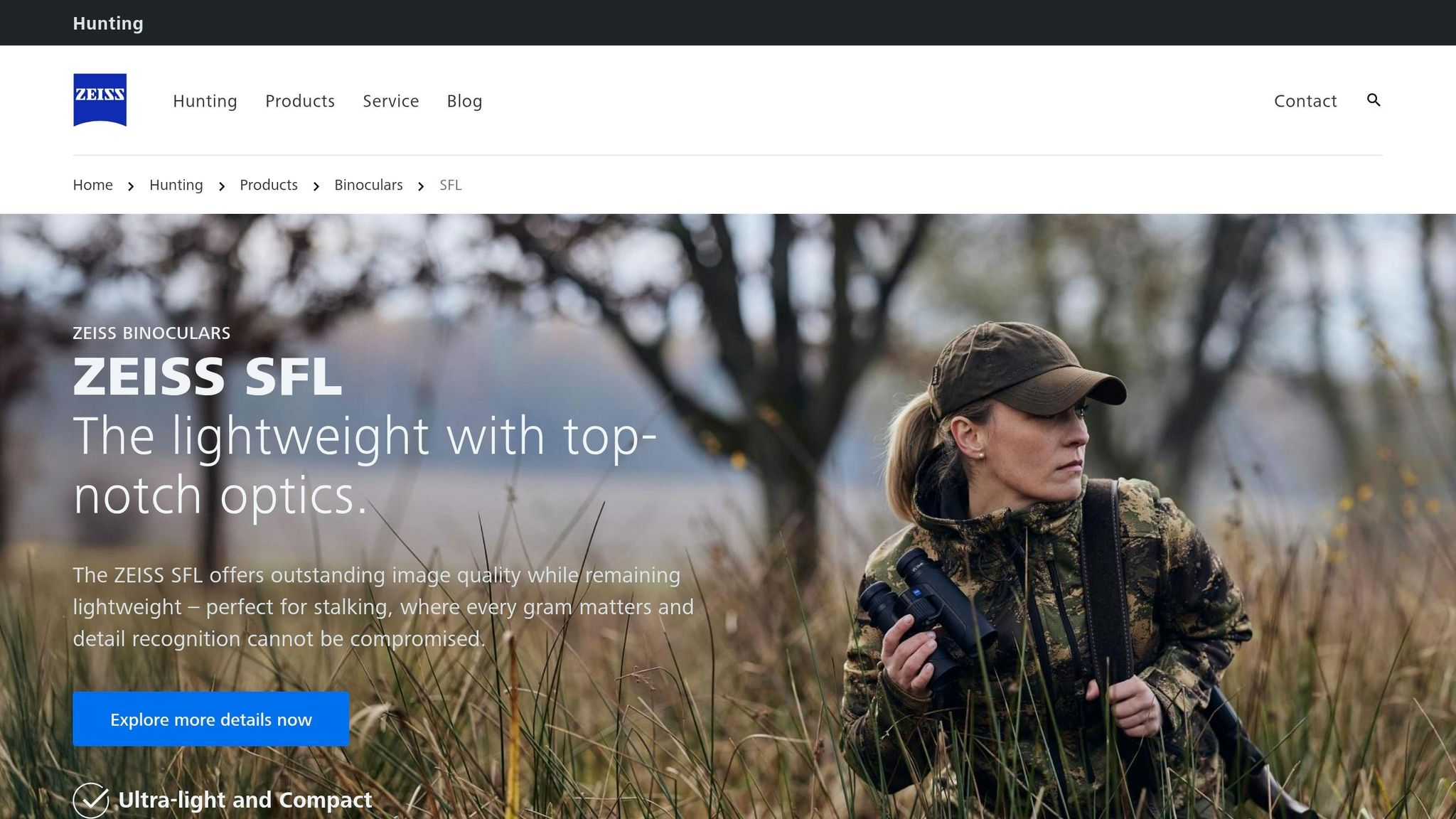
Weighing just 22.6 oz, the Zeiss SFL 10×40 is about 30% lighter than similar models, making it a great choice for stalking hunts. Despite its compact 40mm objective lens, it delivers an impressive 345-foot FOV at 1,000 yards and boasts 90% light transmission, ensuring crisp visuals even in low light.
The binoculars feature Zeiss’s SmartFocus Concept, which requires only 1.4 turns to adjust from close focus to infinity, allowing for quick adjustments – even with gloves on. Thanks to its UHD optical design, colors appear natural and true, aiding in accurate game identification. Dave Hurteau, Editor at Field & Stream, called it the "Editor’s Pick" for best overall binocular, saying:
"Ounce for ounce, this wonderfully lightweight binocular may be the best there is. Period."
It’s worth noting that this level of performance comes at a price, ranging from $1,499 to $1,800. However, the magnesium housing and LotuTec® lens coating ensure durability in challenging weather conditions, and the forgiving eye box allows for easy, full-field viewing without precise eye placement.
| Feature | Specification |
|---|---|
| Magnification | 10x |
| Objective Lens | 40mm |
| Field of View | 345 ft @ 1,000 yards |
| Weight | 22.6 oz (640 g) |
| Light Transmission | 90% |
| Close Focus | 4.9 ft |
| Price Range | $1,499–$1,800 |
Nikon Monarch M7 10×42
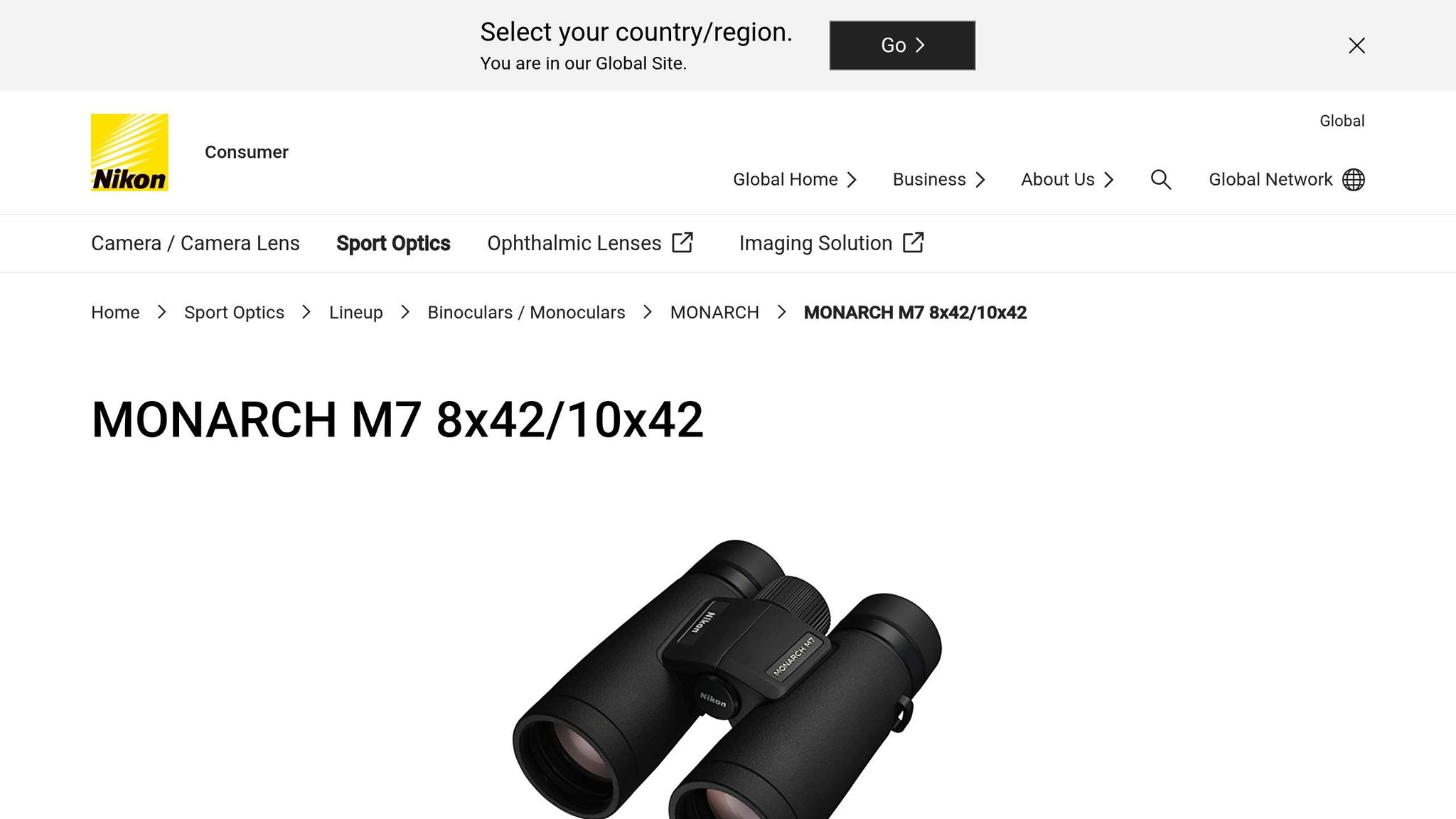
The Nikon Monarch M7 10×42 is a standout for its wide FOV, one of the broadest in its class. Weighing 24 oz with a closed-bridge design, it’s comfortable for extended use. This model’s expansive view makes it perfect for tracking prey in both dense forests and open landscapes.
Leupold BX-5 Santiam HD 10×42
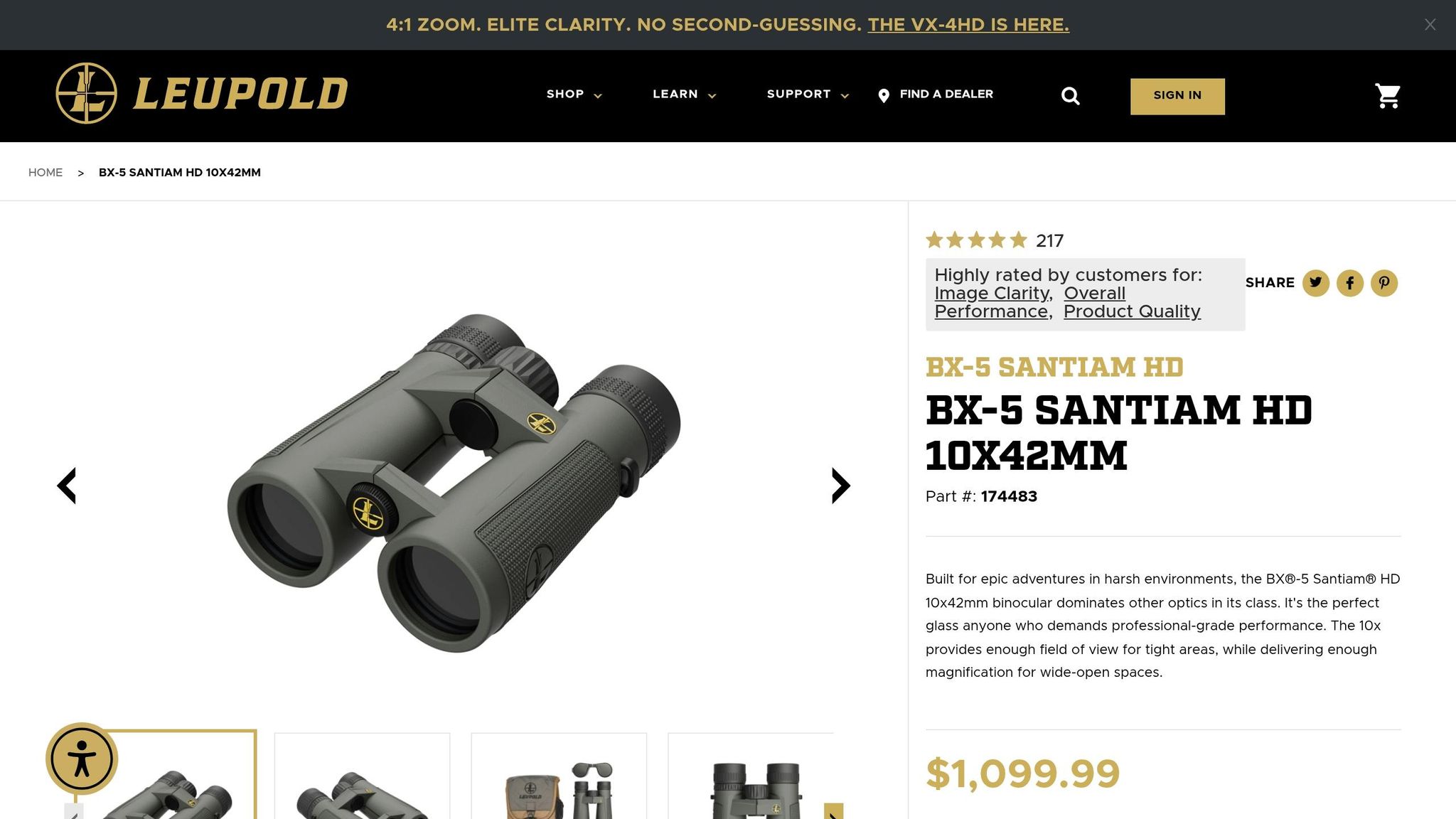
For hunters facing rugged conditions, the Leupold BX-5 Santiam HD 10×42 is built to endure. It has passed stringent submersion and deep-freeze tests, proving its reliability in extreme environments. The open-bridge design, combined with knurled rubber armoring, ensures a secure grip, even for one-handed use. With a 341-foot FOV at 1,000 yards, it provides ample width for scanning. Dave Hurteau remarked:
"The build quality, fit and finish, and ergonomics of the Santiam are first rate."
The focus wheel operates smoothly, and the non-locking diopter maintains firm tension to prevent unintentional changes. While the MSRP is $1,000, it’s often available for around $800, offering excellent value in the premium segment. Some users have noted minor edge blurring, but overall, its optical performance is strong for its price.
How to Choose Magnification and FOV for Different Terrains
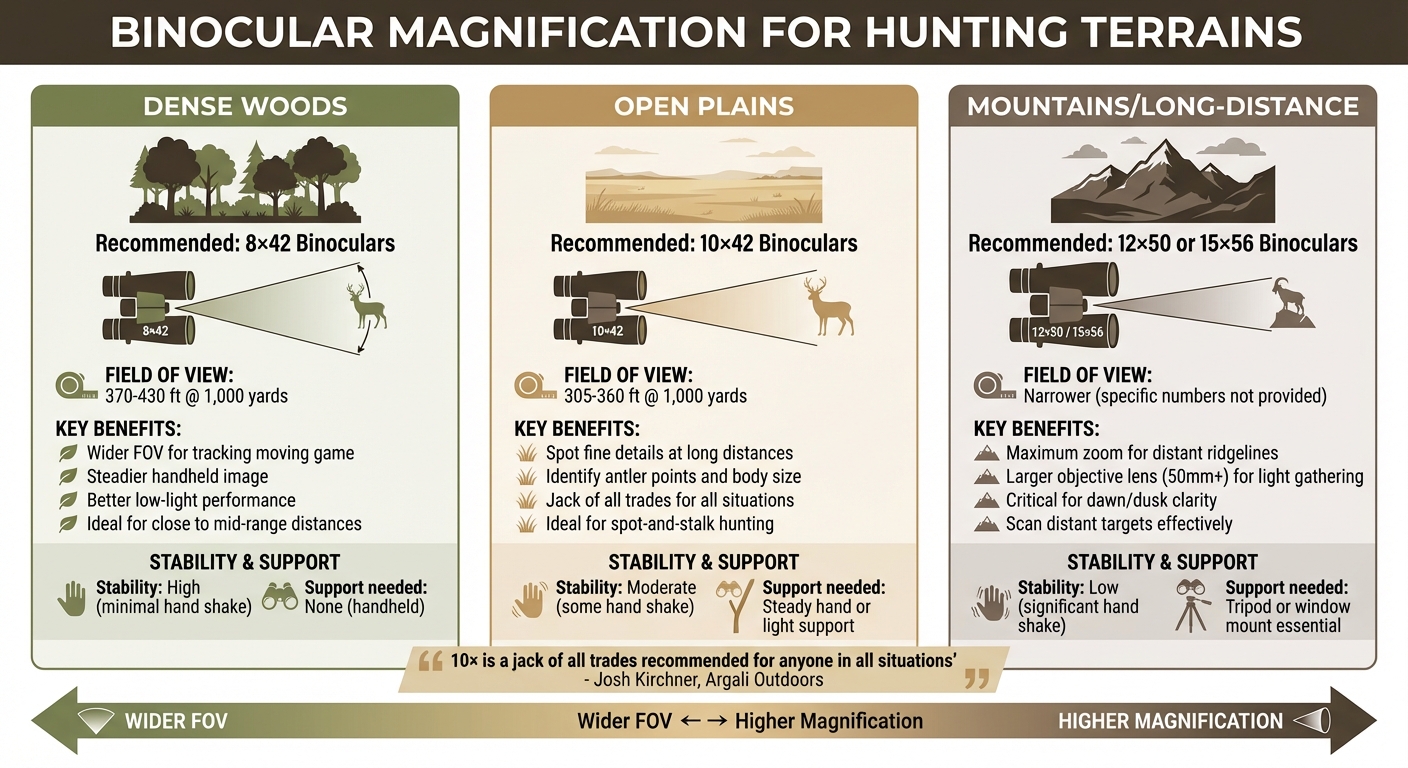
Binocular Magnification Guide for Different Hunting Terrains
The terrain you’re hunting in plays a huge role in determining the right magnification for your binoculars. Here’s the trade-off: as magnification increases, your field of view (FOV) shrinks. This can be a big deal, especially when tracking moving targets. Higher magnifications also make hand shake more noticeable, often requiring a tripod or some kind of support. While 8× magnification is usually steady enough for handheld use, 10× or higher often benefits from extra stabilization. Let’s dive into how different terrains call for specific magnification setups.
Dense Woods: Use 8× Magnification
In dense, wooded areas, 8×42 binoculars shine. Their wider FOV makes it easier to track animals weaving through the trees and brush. This broader view is perfect for quickly locking onto targets at close to mid-range distances. As Dave Hurteau, Executive Editor at Field & Stream, points out:
"If you hunt in the woods, you probably don’t need a lot of magnification"
Another bonus? The 8×42 setup performs well in low-light conditions, which is often critical during early morning or late evening hunts. However, this wider view isn’t as crucial in open landscapes, where more zoom becomes a bigger advantage.
Open Plains: Use 10× Magnification
When hunting in open areas like prairies or deserts, 10×42 binoculars are the go-to choice. Their higher zoom helps you spot details like antler points or body size from far away. This makes them ideal for spot-and-stalk hunting, where long-range visibility is key. Josh Kirchner from Argali Outdoors calls the 10× binocular:
"a jack of all trades and one that we’d recommend to anyone and everyone in all situations"
While 10× magnification does narrow your FOV and make hand shake more noticeable, these challenges can be managed with a steady hand or some support.
Mountains and Long-Distance: Use Higher Magnification
For mountainous terrains or long-distance hunting, higher-powered binoculars like 12×50 or 15×56 models are your best bet. These provide the zoom needed to scan distant ridgelines and pick out details. Frank Bundy from Your Outdoor Connection advises:
"a magnification of 10× to 15× for long-range hunting, offering the right balance between zoom and stability"
At these higher magnifications, using a tripod, window mount, or even a backpack for support becomes almost essential to counteract hand shake. Larger objective lenses (50mm or more) also improve light gathering, which is critical for maintaining image clarity during the low-light hours around dawn and dusk. Models like the Zeiss SFL and Nikon Monarch M7 are great options that align with these needs, ensuring you’re equipped for the challenges of long-range hunting.
8×42 vs 10×42 Binoculars: Which Is Right for You?
When deciding between 8×42 and 10×42 binoculars, the choice often hinges on where and how you hunt. Both models share the same 42mm objective lens, but their magnification levels create distinct advantages and trade-offs. The 8×42 is ideal for tracking fast-moving game in dense cover, while the 10×42 excels at spotting fine details across wide, open landscapes.
Magnification and Field of View: What Sets Them Apart
The main difference lies in the field of view (FOV). With an 8×42, you get 370–430 feet of coverage at 1,000 yards, compared to the 305–360 feet offered by a 10×42. That’s roughly a 15–25% difference, which can be crucial. As the AstroTelescopium Team puts it:
"Wider field of view means faster target acquisition. When a bird flushes from cover or a deer steps out of timber, the 8×42 user finds it first because they are looking through a wider window."
Another factor is image stability. At 10× magnification, hand movements are magnified by about 25%, leading to a shakier view. This can cause eye strain during extended use, and many hunters find they need a tripod or a steady rest. On the other hand, the 8×42 offers a steadier image, allowing for longer glassing sessions without additional support.
In low-light conditions, the 8×42 holds a noticeable edge. Its 5.25mm exit pupil creates a brighter image compared to the 10×42’s 4.2mm exit pupil. This brightness advantage is especially valuable during dawn and dusk, the critical moments of legal shooting light. However, the 10×42 compensates with a higher twilight factor (around 20.5 versus 18.3), which helps reveal fine details even in dim lighting, albeit with a slightly darker overall image.
Eye relief is another consideration, especially for those who wear glasses. The 8×42 generally offers 17–18mm of eye relief, while the 10×42 provides 15–16mm. That extra millimeter or two can make a big difference in seeing the full field of view comfortably with glasses.
| Feature | 8×42 Binoculars | 10×42 Binoculars |
|---|---|---|
| Field of View | 370–430 ft @ 1,000 yds | 305–360 ft @ 1,000 yds |
| Exit Pupil | 5.25mm (brighter in low light) | 4.2mm (dimmer in low light) |
| Stability | High (minimal hand shake) | Lower (amplifies hand tremors) |
| Best Terrain | Dense forest, brush, hardwoods | Open plains, desert, mountains |
| Pros | Faster target acquisition, steadier image | Better long-distance detail, antler ID |
| Cons | Less detail for long-range ID | More challenging for tracking moving targets |
This breakdown makes it easier to match your binoculars to your hunting environment and style. As Michael Valderrama from Sightmark explains:
"If you’re hunting thick woods, brushy draws, or do most of your glassing under 300 yards, go with the 8×42."
For hunters in the West scanning expansive ridgelines or open basins, the 10×42’s extra zoom is invaluable for evaluating trophy quality from afar. The slight price difference reflects the added complexity of the 10×42’s optics.
Conclusion
Choosing the right binoculars means aligning their features with the terrain you’re navigating. In dense woods or brush, an 8×42 configuration works well, offering a wider field of view – typically around 350–400 feet at 1,000 yards – and a steadier image, which is ideal for tracking quick-moving animals. On open plains, 10×42 binoculars strike a good balance between detail and stability. Meanwhile, for mountainous regions, 12× or 15× models are great for spotting fine details like antler points, though you’ll likely need a tripod for stability.
Another key factor is the exit pupil. A range of 4–5mm ensures brightness in low-light settings, a critical advantage when precision is essential.
As Cameron Porter puts it:
"A magnification of 8× to 10× is ideal for hunting, offering enough detail for animal identification and a wide enough field to spot game."
Lens coatings and glass quality also matter. Fully multi-coated lenses enhance light transmission, giving you a sharper and brighter view of your target.
For more guidance and in-depth comparisons, check out Scope It Outdoors. Their hands-on reviews, tested across diverse terrains – from Wyoming’s backcountry to Colorado’s rugged mountains – offer practical insights that go beyond standard manufacturer claims.
FAQs
Do I need a tripod for 12x or 15x binoculars?
A tripod is highly recommended when using 12x or 15x binoculars. It minimizes hand shake and provides much-needed stability, making long observation sessions more comfortable and efficient. This is particularly helpful when you’re tracking wildlife or observing over extended periods.
What field of view should I look for at 1,000 yards?
When using 10x binoculars, a field of view of 112 feet or more at 1,000 yards is typically regarded as a solid range. This strikes a good balance, allowing you to keep track of game with ease while still enjoying sharp magnification.
How do I choose the right objective lens size for low light?
When dealing with low-light conditions, opt for binoculars featuring objective lenses of 42mm or larger. These larger lenses let in more light, which enhances visibility in dim environments. Just keep in mind the balance between the increased size and weight of these binoculars and their practicality for prolonged use.