Master Your Shots with a Scope Reticle Size Estimator
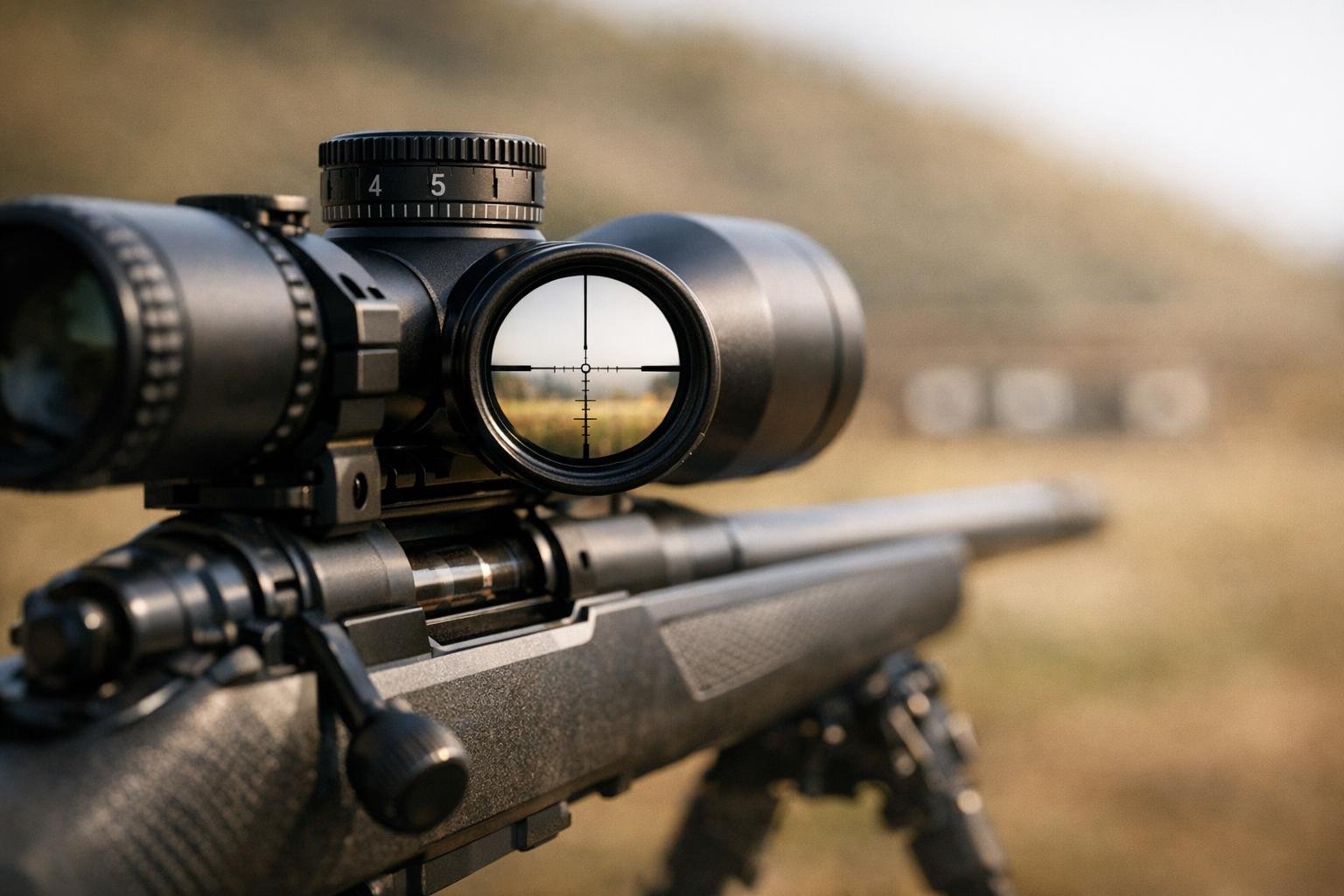
If you’ve ever lined up a shot and wondered how your rifle scope’s reticle translates to real-world distances, you’re not alone. For shooters—whether hunters stalking game or precision marksmen dialing in at the range—understanding reticle behavior is a game-changer. A tool to calculate reticle coverage can bridge that gap, turning complex math into actionable insights. With just a few inputs like magnification and target range, you can see exactly how much ground each mark covers, making adjustments for wind or elevation way less of a gamble.
Why Reticle Calculations Matter
Scopes aren’t just about zooming in; they’re about precision. When you know the exact size of your reticle’s markings at a given distance, you’re better equipped to estimate range or hold over for a shot. This is especially clutch for long-range shooting, where a tiny miscalculation can mean missing by feet, not inches. Beyond that, it builds confidence—knowing your gear inside and out lets you focus on the shot, not the setup. So next time you’re out in the field, take a moment to dial in those numbers. A quick estimation of your scope’s reticle coverage could be the edge you need for a perfect hit.
FAQs
What does reticle size coverage mean for my shooting?
Reticle size coverage tells you how much area each mark or dot on your scope covers at a specific distance. For example, if a Mil-Dot covers 3.6 inches at 100 yards, you can use that to estimate range or adjust for windage. Knowing this helps you make precise shots, especially at longer ranges where small errors add up fast. Think of it as a way to ‘measure’ the field through your scope without second-guessing.
Can I use this tool for any type of rifle scope?
Pretty much! We’ve built this estimator to handle common reticle types like Mil-Dot, BDC, and Duplex, which cover most scopes out there. As long as you know your magnification and the distance you’re shooting at, the tool can crunch the numbers. If you’ve got a super niche reticle, the results might not be exact, but they’ll still give you a solid starting point to work from.
Why does magnification affect reticle size so much?
Magnification changes how ‘zoomed in’ you are on a target, which directly impacts how the reticle appears relative to the real world. At higher magnification, like 10x, each mark on your reticle covers a smaller physical area compared to 4x. That’s why a dot might span 3.6 inches at 100 yards on 10x but a larger area on a lower setting. This tool adjusts for that so you always know what you’re working with.