
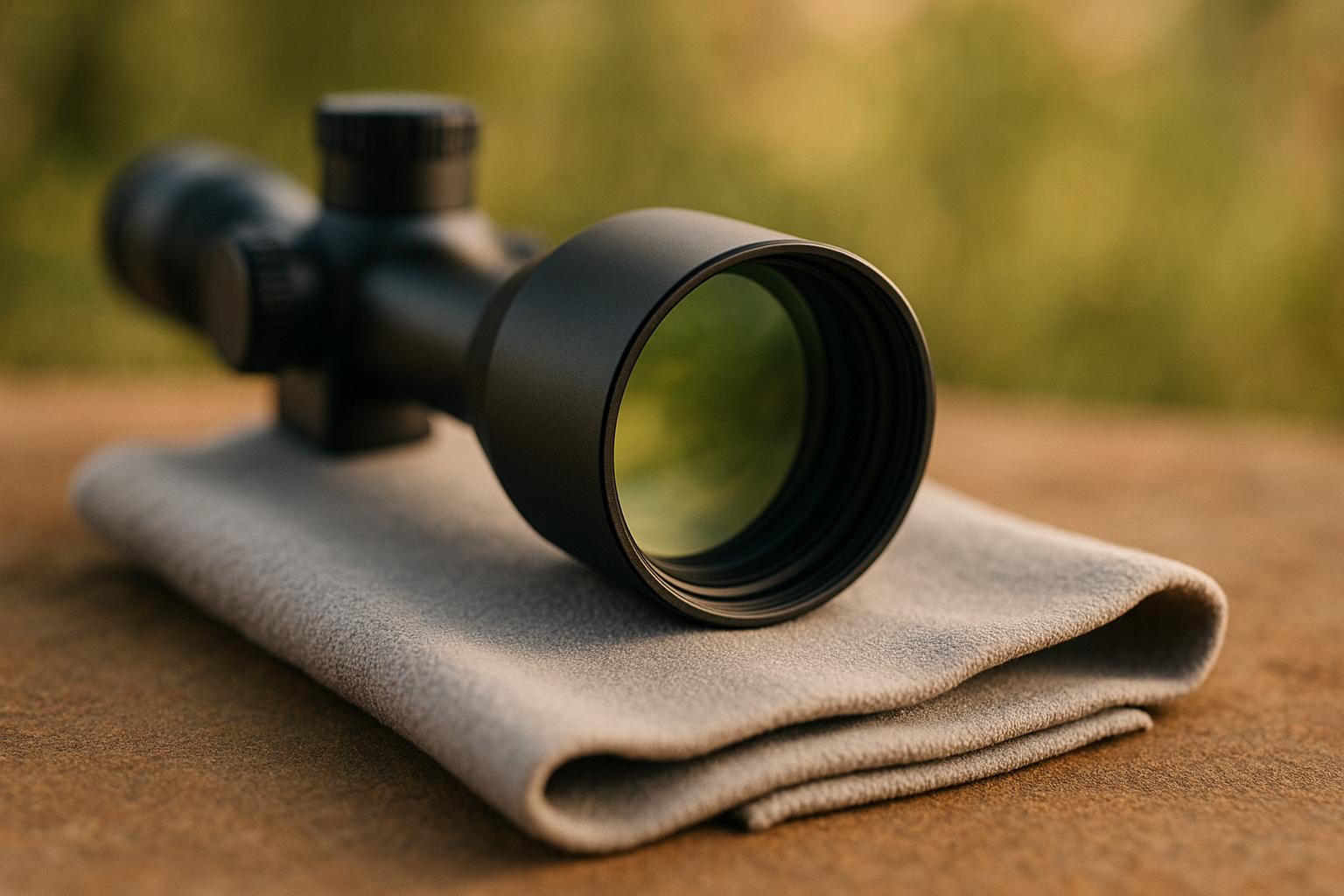
Scratched scope lenses can ruin your view and performance. Proper cleaning and storage are key to keeping your optics in top shape. Here’s the quick version:
- Tools You Need: Use microfiber cloths, soft brushes, air blowers, and optics-specific cleaning solutions. Avoid paper towels, tissues, or harsh chemicals.
- Cleaning Steps: Remove dust first with a brush or air blower. Apply cleaner to a microfiber cloth (not directly on the lens) and wipe gently in circular motions. Dry completely before storing.
- Common Mistakes: Never skip dust removal or use abrasive materials. Over-cleaning can damage lens coatings.
- Storage Tips: Always use protective lens caps and store your scope in a padded case in a dry, cool place.
Taking care of your scope lenses ensures clear, reliable performance in the field. Handle them carefully, clean only when necessary, and store them properly to prevent scratches and damage.
How to Clean a Rifle Scope Lens | Hunting Mark

Required Tools for Scratch-Free Cleaning
Using the right tools can mean the difference between keeping your scope lenses in perfect condition and causing accidental damage. The wrong materials can turn a simple cleaning routine into a costly repair. Here’s what you’ll need to safely maintain your optics and prepare for the step-by-step cleaning process ahead.
Microfiber Cloths
Microfiber cloths are a must-have for lens cleaning. Made from ultra-fine synthetic fibers, typically a mix of polyester and polyamide, these cloths are designed to attract and trap dust, oils, and moisture using static electricity. They’re far more effective than cotton or paper alternatives, absorbing up to eight times their weight in water and leaving no lint behind.
"The right fabric not only maintains the cleanliness of your lenses but also ensures their longevity."
- Sean Yang, eyefiy.com
Unlike paper towels, which can be abrasive, or cotton cloths that leave behind lint, microfiber cloths are safe and versatile. Use them dry for light dusting or slightly damp for more thorough cleaning. To keep them in top condition, wash them regularly with mild detergent, avoiding fabric softeners and bleach, which can damage the fibers. Let them air dry and replace them every 6–12 months or sooner if they show signs of wear.
Optics-Specific Cleaning Solutions
Optics-specific cleaning solutions are specially formulated to protect delicate lens coatings. General-purpose cleaners can strip these coatings, leaving streaks, residue, or even permanent damage. Avoid using gun cleaners or CLPs (Cleaner, Lubricant, and Preservative) on optics, as they contain harsh chemicals meant for metal parts, not lenses.
Most optics-specific cleaners use alcohol-based formulas that evaporate quickly without streaking. If you need an alternative, isopropyl alcohol with a concentration of 90% or higher is a safe option. However, steer clear of acetone, which can leave a residue and potentially harm your lenses.
Before applying any cleaning solution, always use a soft brush or air blower to remove loose debris. This step prevents particles from scratching the lens during cleaning.
Soft Brushes and Air Blowers
Removing loose dust and debris is a critical first step before using any cloth or liquid cleaner on your lens. Soft brushes and air blowers make this task easy and safe. Brushes designed for optics often feature natural bristles or ultra-fine synthetic fibers that gently dislodge particles without scratching the surface. Air blowers provide a contact-free way to clear away dust.
"Unlike ordinary cleaning materials, these ultra-fine synthetic fibers trap dust, oils, and microscopic debris without scratching delicate glass surfaces."
When using these tools, start at the center of the lens and work outward in circular motions. This technique keeps debris from being pushed toward the edges. Always ensure the lens is completely dry before storing it to protect both the lens and its internal seals.
Step-by-Step Guide to Cleaning Scope Lenses
Here’s how to clean your scope lenses without risking scratches.
Step 1: Remove Dust and Debris
Start by getting rid of dust and loose particles before touching the lens with a cloth. This prevents tiny debris from scratching the surface during cleaning. Use a soft-bristled brush or a manual air blower to gently remove dust. For best results, hold the scope upside down so debris falls away naturally. Work from the center of the lens outward. Avoid using canned air – it can cause temperature shock, which might harm the lens.
Step 2: Apply Cleaning Solution to the Cloth
Never spray cleaning solution directly onto the lens. Instead, lightly dampen a microfiber cloth with an optics-safe cleaner. This avoids liquid seeping into seams, which could damage internal components or seals. Use just a few drops of solution – enough to make the cloth damp but not dripping. If there’s excess liquid, wring it out before moving on.
Step 3: Wipe the Lens Gently
Take the damp cloth and, starting at the center of the lens, gently wipe outward in smooth, overlapping circular motions. Use very light pressure; the microfiber cloth is designed to lift oils and residues without scratching. For stubborn spots, slightly re-dampen the cloth and continue wiping gently.
Step 4: Dry and Inspect the Lens
Let the lens air-dry or use a dry microfiber cloth to remove any remaining moisture. Make sure the lens is completely dry, as leftover cleaning solution can attract dust or leave streaks. Under good lighting, inspect the lens from different angles to check for lint, streaks, or missed spots. If needed, repeat the process using a clean section of the cloth. Before storing your scope or replacing the lens caps, confirm the lens is fully dry. Trapped moisture can lead to issues like fogging, fungus, or seal damage. A properly cleaned lens ensures your scope delivers peak performance.
sbb-itb-31b92c7
Common Mistakes to Avoid
Even with the best intentions, cleaning your scope lenses improperly can cause permanent damage. Here’s how to protect your lenses and keep them in top shape.
Using the Wrong Materials
Stay away from abrasive materials like paper towels, tissues, or regular cloths – they can scratch the delicate surface of your lenses. Instead, stick to high-quality, lint-free microfiber cloths, air puffs, and isopropyl alcohol for safe and effective cleaning. Also, when washing your microfiber cloths, skip the fabric softeners. They can leave behind residues that cause streaks on your lenses.
Skipping Dust Removal
Dust might seem harmless, but it often contains silica – tiny particles harder than glass. If you wipe your lens without removing this dust first, you risk dragging these particles across the surface, leaving scratches behind. Even minor scratches can scatter light, reducing clarity over time and possibly leading to the need for a replacement scope. Always remove loose debris before wiping. For heavily soiled lenses, rinse them with water to loosen stubborn particles before cleaning.
Storage and Handling Tips
After cleaning your lens, how you store and handle it plays a big role in keeping it clear and functional. These practices help prevent scratches and ensure your scope maintains its performance over time.
Use Protective Lens Caps
Always put lens caps back on when your scope isn’t in use. This simple habit protects your lenses from dust, debris, and accidental scratches. Tina Fa’apoi, an Expert Optics Tester at Target Tamers, emphasizes:
"Scope caps are a must-have accessory. Though they vary in cost, design, features, and quality, their one job is to protect the lenses. They can be as simple as rubber bikini caps or as feature-packed as flip-up, magnetic, screw-in ones. Protect the glass and you lengthen the scope’s effective life."
Look for lens caps made from durable, impact-resistant materials, and ensure they fit snugly without interfering with your scope’s usability. If you need quick access, flip-up covers are a great option – they’re easy to open when time is of the essence. Some hunters prefer caps that stay on during transport to reduce the risk of damage while their firearm is stored in a case or safe.
Once your lenses are covered, store your scope in a padded case for extra protection.
Store in a Padded Case
Proper storage is just as important as cleaning when it comes to protecting your scope. A quality padded case helps shield your scope from impacts, moisture, and dust. James Gunn from Gunnr advises:
"The best way to safeguard your LPVO from impacts, moisture, dust, or any other hazard is to place it in a quality protective case."
Whenever possible, choose a hard case with a soft interior lining, as it offers better protection against drops and bumps. A case with removable dividers is a smart choice, allowing you to customize the fit for your scope. Store your scope in a stable environment with low humidity (60°F–75°F), and consider adding silica gel packs to control moisture. Keep the storage area relatively dark to avoid lens degradation from prolonged light exposure. Finally, avoid placing heavy objects on top of the case or scope to prevent internal damage or misalignment.
Handle with Care
Handling your scope carefully is just as crucial as cleaning it. Always use clean, dry hands to avoid transferring oils, dirt, or moisture to the lens surface. When setting the scope down without a case, place it on its mounting rings or base – never lens-down. Simple precautions like these can make a big difference in maintaining your scope’s quality and performance.
Key Points for Lens Care
Taking care of your scope lenses is all about using the right tools, cleaning them gently, and storing them properly. Follow these essential tips to keep your lenses scratch-free and in top condition.
Use the right tools. Opt for optics-grade cleaning kits, which typically cost between $19.95 and $35.25. These kits are designed to protect your lenses and are worth the investment.
Avoid using paper towels, tissues, or regular cloths on your lenses. These can scratch the delicate coatings. Similarly, steer clear of gun cleaners or CLP products, as they can damage the protective layers on your lenses.
Clean only when necessary. Over-cleaning can wear down the coatings that protect your lenses. When cleaning is needed, use a microfiber cloth and gently clean in circular motions. Make sure the lens is completely dry before storing it to avoid water damage or mold growth.
Store your scope correctly. Always keep your lenses in protective cases and store them in controlled environments. Proper storage and handling will help ensure clear lenses and reliable performance in the field.
FAQs
What happens if you use the wrong materials to clean scope lenses?
Using the wrong cleaning materials on your scope lenses can cause lasting damage. Abrasive materials can leave scratches on the lens surface, and harsh cleaners might strip away or ruin the anti-reflective coatings. This damage doesn’t just affect the appearance – it can diminish optical clarity, making it harder to see through your scope and potentially causing irreversible harm. To avoid these issues, stick to tools made for optics care, like microfiber cloths and cleaning solutions specifically formulated for lenses. Protect your gear by cleaning it the right way.
How often should I clean my scope lenses to keep them in great condition without causing scratches?
You should clean your scope lenses only when they look dirty or smudged. Cleaning them too often can actually do more harm than good, as it increases the chance of scratches. A good rule of thumb is to clean them every few months or after using them in particularly dusty or wet conditions.
Before cleaning, take a moment to inspect the lenses. Use the right tools – like a soft brush, an air blower, or a microfiber cloth – to carefully remove dust and debris. Be gentle and avoid pressing too hard to keep your lenses clear and in great condition for the long haul.
How should I store my scope to protect the lenses from scratches and damage?
To protect your scope lenses from scratches and damage, always make sure the lens caps are firmly in place when not in use. Store the scope in a protective case or cover to guard against dust, moisture, and accidental bumps. Keep it in a cool, dry, and clean location, steering clear of extreme temperatures or high humidity. Taking these steps will help keep your scope in top shape for your next outdoor excursion.