
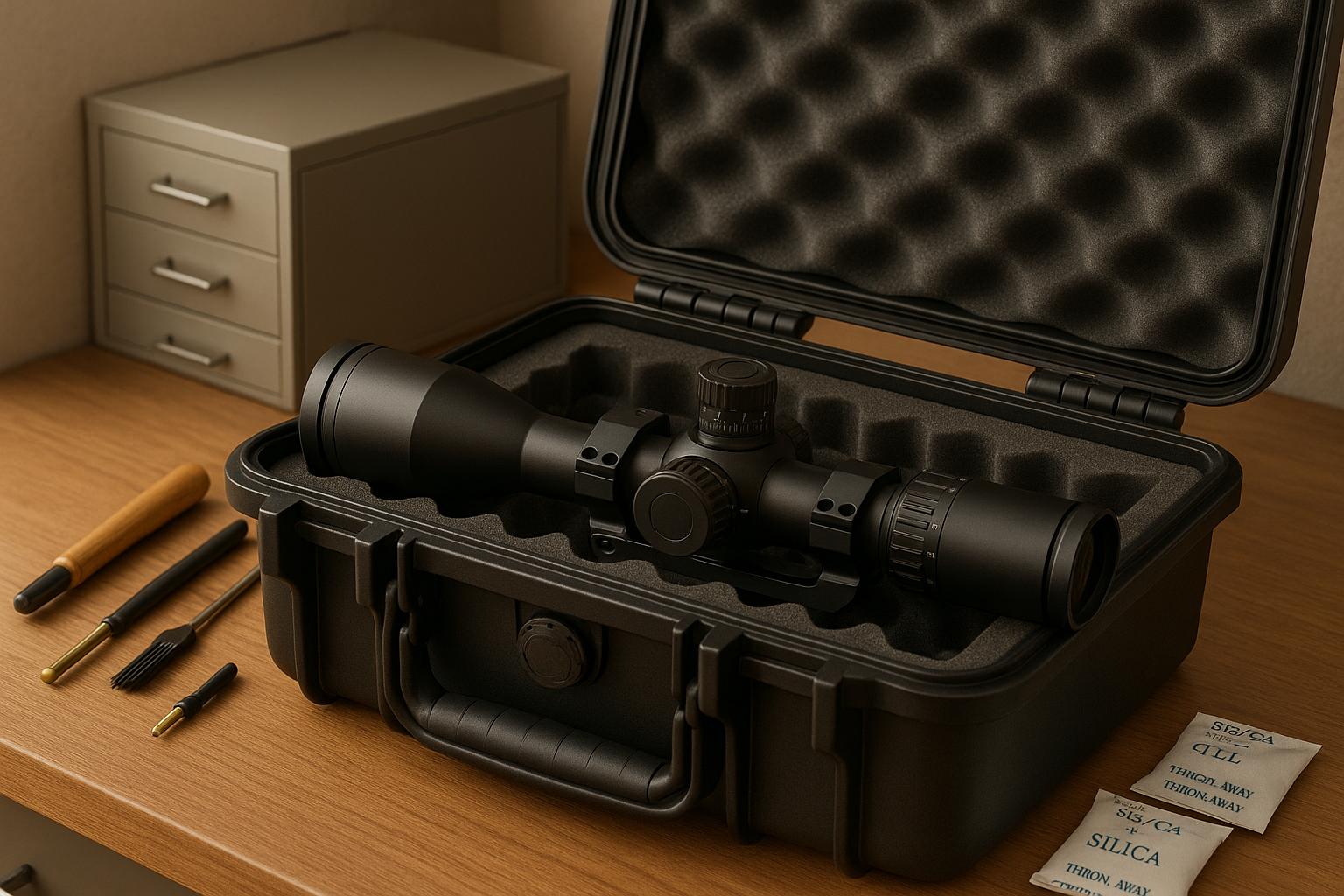
Want to keep your scope in top condition for years? Proper storage is the key to protecting your investment and ensuring reliable performance. Here’s what you need to know:
- Use Protective Lens Caps: Shield lenses from dust, dirt, and moisture.
- Clean Thoroughly Before Storage: Remove debris and oils to prevent corrosion.
- Invest in a Quality Storage Case: Choose a hard or soft case with foam padding and water resistance.
- Control Humidity Levels: Maintain 40%-60% humidity to avoid mold and rust.
- Maintain Stable Temperature: Store between 60°F-75°F to prevent thermal damage.
- Store in Vertical Position: Reduce stress on internal components.
- Leave Adjustable Components Unlocked: Prevent spring compression damage.
- Perform Regular Checks: Inspect monthly for moisture, damage, or wear.
- Remove Detachable Components: Avoid stress on joints and prevent battery corrosion.
- Use Proper Storage Cabinets: Organize and protect multiple scopes.
Quick Tip: Clean and dry your scope before storage, control the environment, and check regularly to catch issues early. These simple steps will save you from costly repairs and extend your scope’s life.
Storage solutions for your photography and astronomy gear
1. Use Protective Lens Caps
Taking care of your scope’s lenses is crucial since they are the most delicate part of the equipment, especially during storage. Lens caps provide a simple yet effective way to shield your optics from dust, dirt, and moisture. Make sure to use both front and rear caps: the front cap protects the objective lens from scratches and environmental hazards, while the rear cap safeguards the eyepiece and internal components when the scope is not mounted. Skipping one cap leaves parts of your optics exposed and vulnerable.
When choosing lens caps, the quality of the material plays a big role. Caps made from high-quality ABS plastic are lightweight, durable, and often feature a center pinch mechanism for easy removal. They’re designed to offer reliable protection without adding unnecessary bulk to your scope.
For even better protection, consider lens caps with O-ring seals. These seals create an airtight and watertight barrier, which is especially useful in environments with fluctuating humidity or temperatures that could lead to condensation. Make sure the caps fit snugly – loose caps can let in debris, while overly tight ones could damage the lens threads. A good lens cap should snap on securely without requiring too much force and should be easy to remove when needed.
Another advantage of using lens covers is that they prevent dust buildup, saving you valuable time during early morning hunts when every second matters.
When selecting lens caps, focus on durability and flexibility. Materials like rubber, neoprene, or high-quality polymers are excellent choices as they can withstand a range of temperatures and conditions, ensuring your lenses stay protected during any adventure.
2. Clean Thoroughly Before Storage
Keeping your scope clean is essential for maintaining its clarity and avoiding long-term damage. Dirt, oils, and debris left behind can lead to corrosion and degrade performance, which could ultimately affect your investment.
For cleaning, stick to the right tools: a lens brush or air blower, an optics-specific cleaning solution, and a microfiber cloth. Avoid using paper towels, tissues, or clothing, as they can scratch the lens coatings. Similarly, steer clear of gun cleaners or CLP products on optical lenses – they can harm the protective coatings. Take your time and clean carefully to avoid scratches and ensure no debris is left behind.
Start by removing loose debris with an air blower or a soft lens brush, working from the center of the lens outward. This method minimizes the risk of scratching by preventing debris from being dragged across the lens surface. When applying the cleaning solution, lightly dampen the microfiber cloth instead of spraying directly onto the lens. If you don’t have an optics-specific cleaner, isopropyl alcohol with at least 90% concentration is a good alternative.
Use small, circular motions to wipe from the center outward, then dry the lens with a clean section of the microfiber cloth. Always remove dust before using any cloth to avoid grinding particles into the lens. For those tight spots, like turret ridges, Q-tips can be a helpful tool.
Don’t neglect the scope’s exterior. Clean all outer surfaces, including removable parts like turrets, and be sure everything is completely dry before storage. If your scope has been exposed to wet or windy conditions, thorough cleaning and drying are even more critical to prevent water damage, mold, or fungi from forming.
As Ralph Basile, Vice President of Healthmark, explains:
"The longer that proteins and other residual soils are allowed to dry, the more difficult they will be to clean from the scope, inside and out. Rinsing away gross contaminants immediately after use is key to proper reprocessing of scopes."
Lastly, avoid over-cleaning. Excessive cleaning can wear down protective coatings, so it’s best to clean only after regular use. In especially harsh or dusty conditions, clean your scope right away. Before storing it long-term, make sure it’s thoroughly cleaned and completely dry to keep it in top condition for years to come.
3. Invest in a Quality Storage Case
After giving your scope a proper cleaning, the next step is to ensure it stays safe during long-term storage. A good storage case is your best defense against physical damage, moisture, dust, and other elements that can impact your scope’s performance. But how do you decide between a hard case and a soft case? Let’s break it down.
Hard cases are the go-to choice for maximum protection. Made from tough materials like aluminum, durable plastics, or composites, they’re built to handle drops, crushing forces, and other serious impacts. Many hard cases also feature sealed designs that keep moisture out, adding an extra layer of security.
On the other hand, soft cases offer a lighter, more affordable option. While they don’t provide the same level of impact resistance, they’re great for shielding your scope from scratches, minor bumps, dust, and dirt. Look for options made from high-denier ballistic nylon or Cordura, as these materials are resistant to tears and abrasions.
No matter which type of case you choose, interior foam padding is a must. Foam not only absorbs shocks but also keeps your scope stable during transport. Many cases include customizable foam inserts that you can trim to fit your scope perfectly, minimizing any unwanted movement.
Water resistance is another key feature to look for. Even indoor storage can expose your scope to humidity or unexpected spills, so opt for cases with waterproof exteriors and sealed closures. These features ensure your scope stays dry, whether it’s facing rain, snow, or just a humid environment.
Pay attention to the closure systems as well. Heavy-duty zippers, sturdy latches, or integrated locks can prevent accidental openings, while reinforced corners and edges add durability where it’s needed most.
When shopping for a case, go for one specifically designed for scoped rifles. Generic storage containers might not provide the snug fit or specialized features – like lens protection areas and room for adjustment knobs – that your scope requires. A proper fit reduces unnecessary movement, protecting both your scope and rifle.
For those with multiple scopes or who frequently transport their gear, investing in a premium case from a trusted brand like Pelican can be worth it. These cases are known for their crushproof construction and long-term reliability, even if they come with a higher upfront price.
In short, a quality storage case isn’t just an accessory – it’s an investment in the longevity and performance of your scope. Choose wisely!
4. Control Humidity Levels
Once your scope is securely stored, the next crucial step is managing moisture levels. Ideally, you want to maintain humidity below 60%, with around 40% being the sweet spot for scope storage.
"The main thing is that the humidity must be less than 60%, preferably 40%." – Binastro
Why is this important? Excess moisture can create a breeding ground for fungal spores. These tiny organisms thrive on protein-rich particles like dust mites and skin debris that often settle on optical surfaces. Over time, they can damage lens coatings and even etch into the glass. High humidity also leads to condensation, which may contain acids that cause fogging, mold growth, and rust on metal parts – all of which can severely impact your scope’s performance.
To keep humidity in check, start by monitoring it. A digital hygrometer with an accuracy of ±2% is a reliable tool for this purpose. Options like the ThermoPro TP50 are budget-friendly, while the Govee H5179 WiFi Thermometer Hygrometer offers remote monitoring and real-time alerts for humidity spikes.
For humidity control, silica gel packets are a simple yet effective solution, especially when placed inside storage cases. If you’re dealing with a persistently humid environment, consider using a dehumidifier. Compact dehumidifiers designed for small spaces, like gun safes or storage cabinets, can work wonders in keeping moisture at bay.
Ventilation also plays a key role. Before storing your scope, let it air out in a well-ventilated area to ensure any trapped moisture evaporates completely. For those in particularly humid regions, airtight containers paired with humidity-absorbing materials can create a controlled microenvironment. This extra step ensures your optics stay protected, even when the surrounding air is saturated, safeguarding your scope’s performance and longevity.
5. Maintain Stable Temperature
Keeping a steady temperature is key when storing your scope for the long haul. Scopes are built with a mix of materials – glass, metal, and plastic – that react differently to temperature changes. These materials expand and contract at varying rates, which can create internal stress and, over time, damage your optics.
For optimal storage, aim for a temperature range between 60°F and 75°F (15°C to 24°C). Avoid rapid temperature changes, as they can lead to thermal shock. Stealth Vision® highlights this risk:
"Leaving your rifle scope in cold weather may not damage it, but warming the unit too quickly might."
Thermal shock can crack cold lenses and throw off internal alignment due to uneven expansion and contraction . Additionally, frequent temperature fluctuations can degrade seals, compromising waterproofing, and cause lubricants in adjustment mechanisms to lose their effectiveness – leading to mechanical problems .
Avoid storing your scope in places prone to extreme or fluctuating temperatures, such as garages, attics, or car trunks. Prolonged exposure to direct sunlight can also overheat your scope, speeding up the wear and tear on internal components .
The best option is a climate-controlled space, like a bedroom closet or a dedicated gun room, where temperatures remain stable. If you have no choice but to store it in a garage or basement, consider insulated storage containers or thermal blankets to help protect against sudden temperature changes. Before using your scope, let it gradually adjust to the surrounding temperature to prevent unnecessary stress on its components.
sbb-itb-31b92c7
6. Store in Vertical Position
After ensuring your telescope is clean and safely encased, storing it vertically is another effective way to protect its internal components. This method helps maintain proper alignment and reduces the risk of long-term damage. By minimizing the effects of gravity, vertical storage prevents stress on internal parts and keeps lubricants and oils from settling on optical surfaces during extended storage.
"Orienting the tube vertically upwards puts the least long-term stress on the focusing mechanism from the mirror’s weight."
To maximize protection, hang the telescope in a way that allows for ample clearance around it. This reduces the chances of accidental bumps or impacts that could disrupt the alignment of optical elements.
If your telescope is mounted using a quick-disconnect dovetail system, consider removing the optical tube before storage. This step eliminates unnecessary strain from the mounting hardware and provides a more secure setup for long-term preservation.
For Schmidt-Cassegrain telescopes (SCTs), many users opt to store them with the corrector plate facing up and the primary mirror down. This position prevents grease from the focusing mechanism from dripping onto critical optical surfaces, which could otherwise require professional cleaning.
Before placing the telescope in vertical storage, make sure to rack the mirror fully back. This helps relieve stress on the support components and ensures the telescope is ready for its next use.
7. Leave Adjustable Components Unlocked
When storing your scope for an extended period, it’s important to keep all adjustable parts – like turrets and focus rings – in their neutral, unlocked positions. Why? Locking these components for too long forces the internal springs to stay compressed. Over time, this constant pressure can weaken the springs or even cause them to lose their shape.
Trigger Monkey, a seasoned scope technician, has observed cases of erector spring failures in Leupold scopes. According to him, these failures often result from storing scopes with the springs compressed for extended durations.
8. Perform Regular Checks
Even with the best storage practices, regular checks are essential to keep your scopes in top condition. These inspections can catch slow-developing issues like moisture buildup or wear and tear before they lead to expensive repairs.
Make it a habit to inspect scopes in long-term storage at least once a month. This routine pairs well with other storage tips mentioned earlier.
During each inspection, focus on the areas that matter most. Start with the lenses – check for scratches, cracks, or any cloudiness. Ensure the lenses are properly aligned and that there’s no edge separation. Pay close attention to the seals around the lenses, as a broken seal can allow moisture to seep in, potentially causing damage over time.
Next, examine the body of the scope. Look for physical damage like dents, cracks, or signs of seal deterioration. Check adhesive joints for rough edges or cracks, and make sure adjustment knobs and turrets move smoothly. Keep an eye out for early signs of moisture, such as internal fogging or stains. Even slight cloudiness inside the scope can indicate moisture problems that may escalate if ignored.
To stay organized, create a simple inspection checklist tailored to your scopes and storage conditions. Record your observations during each check, and use these notes to refine your process over time. This proactive approach can help maintain the performance of your scopes for years.
If you spot any issues, address them immediately. For illuminated reticle scopes, remove the batteries to prevent corrosion. For mechanical problems or moisture concerns, consult a qualified technician without delay. Quick action can save you from bigger headaches down the road.
Lastly, use your findings to improve your routine. If certain problems keep cropping up, adjust your storage setup or increase the frequency of inspections. Catching small issues early can prevent them from turning into costly repairs.
9. Remove Detachable Components
Before storing your scope for an extended period, take apart any removable components. This step reduces stress on connection points and helps protect the scope’s overall integrity.
What should you remove? Start by detaching scope rings, mounting bases, lens covers, and any aftermarket add-ons like sunshades. If your scope has an illuminated reticle, make sure to remove the batteries to avoid potential leakage and corrosion. Additionally, take off any detachable eyepieces or diopter rings.
Leaving these components attached can put unnecessary strain on joints and connections. By removing them, you reduce the risk of stress-related damage and make ongoing maintenance easier. Once disassembled, keep the parts organized for simple reassembly later.
"Remove all of the valves and accessories before storing the scope"
Store these detached items in labeled bags or containers. Keeping them in the same case or cabinet as your scope ensures they’re easy to find while also preventing scratches. This setup also simplifies routine inspections for signs of wear, corrosion, or other issues.
Disassembling removable components before storage not only preserves your scope’s accuracy but also extends the life of its parts, ensuring it’s ready to perform when you need it.
10. Use Proper Storage Cabinets for Multiple Scopes
When it comes to protecting multiple scopes, proper storage is just as important as cleaning and selecting the right cases. Dedicated storage cabinets are designed to provide the ideal environment for long-term care, ensuring your scopes remain in excellent condition over time.
It’s crucial to select cabinets specifically designed for scope storage rather than improvising with generic solutions. These cabinets are built to meet cleaning and storage standards, often including detailed manufacturer instructions to maintain optimal conditions.
The right cabinet does more than just store your scopes – it actively protects them from dust, moisture, and physical damage. For instance, vertical storage options keep scopes secure, while HEPA filtration systems remove 99.97% of particulates, reducing the risk of moisture and dust accumulation.
Given the significant investment scopes represent, security is another key consideration. Durable cabinets with locking mechanisms help prevent unauthorized access and safeguard against accidental damage.
Organization and accessibility also play a big role in daily use. Features like rotating holders, padded back walls, specialized mounting systems, and integrated cord management not only keep equipment neatly arranged but also minimize handling stress.
The layout of the cabinet matters, too. Vertical configurations make it easier to see and retrieve scopes in larger collections, while horizontal setups are ideal for smaller spaces, reducing unnecessary movement during storage.
Maintenance is an essential part of cabinet selection. Opt for models made from materials that can withstand regular cleaning with approved products. Assign cleaning duties – ideally at least once a week or whenever the cabinet shows signs of dirt – to ensure the storage environment remains pristine.
For larger collections, advanced features like real-time data displays, scope tracking systems, and remote monitoring can be game-changers. These tools are particularly useful for managing scopes with varying maintenance schedules or usage patterns, offering convenience and peace of mind.
Conclusion
Proper long-term storage isn’t just about finding a spot to stash your scope – it’s about protecting your investment and ensuring your equipment is ready to perform when you need it most. The ten tips outlined earlier provide a solid strategy to tackle common threats like moisture, contamination, physical damage, and fluctuating conditions.
At the core of effective storage is careful cleaning, thorough drying, and maintaining stable temperature and humidity levels. These steps go a long way in preventing damage and preserving the integrity of your scope. In other words, taking the time to store your scope correctly doesn’t just extend its usability – it safeguards your investment for years to come.
Protective storage options, such as cabinets, cases, or covers, play a key role in shielding scopes from harm. They help reduce physical damage, keep contaminants at bay, and minimize unnecessary handling. As Total Scope, Inc. puts it:
"Following these protocols will reduce some of the most common repairs, thus saving you from unnecessary & avoidable repair costs!"
Additionally, using vertical storage solutions with proper ventilation can further protect your equipment by preventing moisture buildup and ensuring good air circulation.
For those managing multiple scopes or wanting to dive deeper into optical equipment care, Scope It Outdoors (https://scopeitoutdoors.com) is a valuable resource. They offer expert reviews, detailed guides, and personalized advice from outdoor enthusiasts like Steve, Ben, David, Brett, Brady, and Josh. Whether you’re a beginner or a seasoned user, their insights can help you choose, maintain, and store your scopes wisely.
Consistent storage habits are the difference between scopes that last for decades and those that constantly need repairs. Investing in proper storage equipment, climate control, and regular upkeep will save you money on repairs and ensure your scope is always ready when it matters most. By adopting these practices, you can count on dependable performance and a longer lifespan for your equipment.
FAQs
Should I use a hard case or a soft case for long-term scope storage?
When deciding between a hard case and a soft case for long-term scope storage, it really comes down to what you need.
Hard cases are built to provide top-notch protection from impacts, moisture, and dust. If you’re storing your scope for a long time or transporting it through tough conditions, a hard case is the way to go. Many of these cases are designed to be crush-proof, have watertight seals, and come with foam inserts to keep your scope snug and safe.
Soft cases, by contrast, are lightweight and much easier to carry around. They offer basic protection against scratches and minor bumps, making them a good option for short trips or casual use. However, they don’t match the durability of hard cases. If you’re storing your scope in a high-risk environment or for an extended period, a hard case is the better option. For everyday use, though, a soft case might do the trick.
How can I maintain the right humidity and temperature for long-term scope storage?
To keep your scopes in top shape during long-term storage, it’s essential to manage both temperature and humidity. Aim to store them in a space where the temperature stays between 59°F and 77°F and humidity levels range from 30% to 60%. This helps prevent moisture buildup, which can lead to rust or mold.
If possible, use a climate-controlled cabinet or room for storage. Alternatively, placing silica gel packets inside storage cases can help absorb any excess moisture. Make it a habit to inspect your scopes regularly for signs of damage or moisture. Also, steer clear of storing them in areas prone to extreme heat, cold, or sudden humidity changes. Following these steps will ensure your scopes remain in great condition and ready for your next outing.
Why should I store my scope vertically, and how does it help protect it over time?
Proper vertical storage of your scope is a smart way to protect its performance and extend its lifespan. Storing it upright allows any leftover moisture inside to drain naturally, which helps prevent rust or bacterial buildup that could harm the scope’s internal components. Keeping it dry is a crucial step in maintaining its long-term functionality.
On top of that, vertical storage reduces strain on sensitive parts and avoids accidental damage that can happen from overcrowding or stacking improperly. By adopting this straightforward habit, you can keep your scope in great shape and ready to use whenever you need it.