
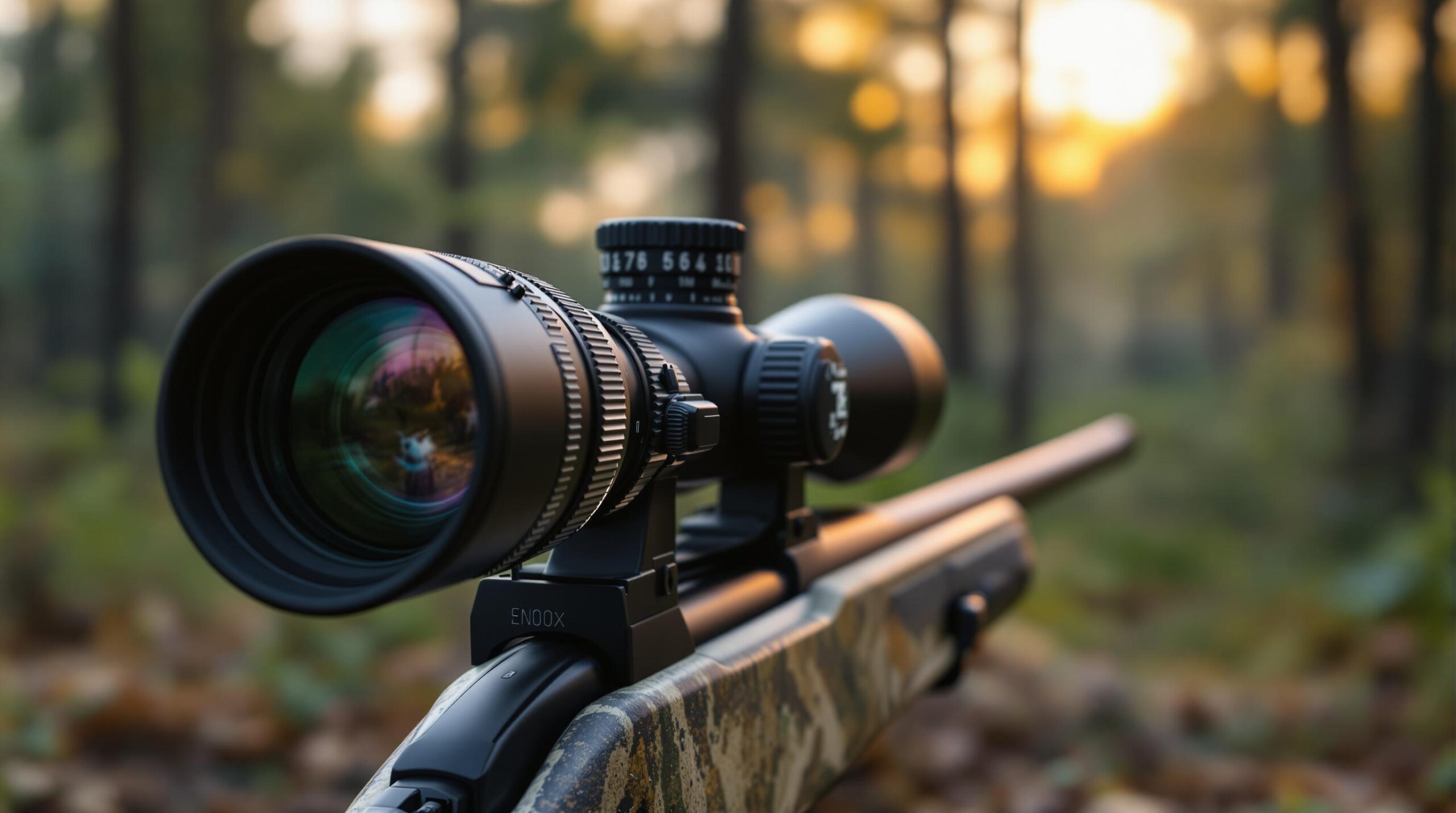
When your rifle scope isn’t working properly, it can ruin your accuracy and your hunt. Here are the 5 most common scope problems and how to fix them:
- Misaligned Reticles: Causes shots to drift; fix by aligning with a plumb line and securing with a torque wrench.
- Blurry Images: Often caused by poor focus or dirty lenses; adjust eye relief, clean lenses, or focus the reticle.
- Losing Zero: Happens due to loose mounts or improper setup; check mounts, bore-sight, and test shot groups.
- Fog or Moisture: Caused by temperature changes or damaged seals; clean with anti-fog solutions and store in dry conditions.
- Turret Malfunctions: Issues like resistance or mushy clicks; clean, lubricate, or replace turrets as needed.
Quick Tip: Regular maintenance – cleaning, checking alignment, and inspecting mounts – can prevent most of these issues. Keep your scope in top shape to ensure consistent, accurate performance.
Canted Reticle Troubleshooting
1. Fixing Misaligned Reticles
Did you know that a reticle misaligned by just two degrees can cause shots to drift 17.6 inches horizontally at 500 yards when using a .300 Win. Mag?. Here’s how to identify and fix this issue to keep your shots on target.
How to Spot Reticle Misalignment
Signs of a misaligned reticle include:
- Drifting crosshairs: Holdover marks consistently shift left or right of the target.
- Tilted impact patterns: Bullet impacts form a slanted line instead of aligning vertically during elevation adjustments.
- Off-center shots: At longer ranges, shots land off-target even with proper aim.
Steps to Realign Your Reticle
Follow these steps to fix a misaligned reticle:
- Secure the rifle: Stabilize your rifle, attach a bubble level, and loosen the scope rings. Set up a plumb bob about 70 yards away.
- Align with the plumb line: Look through the scope while keeping the bubble centered. Use the plumb line as a guide.
- Adjust the scope: Gradually rotate the scope until the vertical reticle matches the plumb line.
Preventing Future Misalignment
Once your reticle is aligned, take these steps to maintain it:
"Mounting a riflescope may seem like a daunting and overly technical task, not to mention how integral a proper mount is to shooting accurate and ethical shots in the field".
- Use a torque wrench: Tighten screws to the manufacturer’s recommended tension.
- Choose quality gear: Invest in reliable scope rings and bases.
- Regular checks: Inspect alignment before every hunting trip.
- Protect your rifle: Store it in a sturdy case to avoid accidental impacts.
Even a small cant, like five degrees, can cause a 3.7-inch error at 300 yards. Proper mounting and regular maintenance ensure your scope stays aligned and accurate when you need it most.
2. Clearing Blurry Scope Images
Clear optics are just as important as proper alignment when it comes to accurate shooting. A blurry scope can make or break a hunt, so let’s dive into what usually causes unclear scope images and how to fix them.
Common Causes of Blurry Scope Images
Blurry images in your scope can stem from several sources:
- Adjustment Errors
- Incorrect eye relief can create dark edges in your sight picture.
- An out-of-focus ocular lens makes the reticle appear unclear.
- Factory-set parallax may cause blur at non-standard ranges.
- Environmental Factors
- Heat waves from hot barrels can create a mirage effect.
- Humidity and temperature shifts can reduce lens clarity.
- Bright sunlight can cause glare or wash out the image.
- Equipment Problems
- Loose mounts can throw off your scope’s alignment.
- Poor-quality optics may not perform well at higher magnifications.
- Dirty or scratched lenses block light and reduce clarity.
Steps to Fix Blurry Scope Views
Try these quick fixes to sharpen your scope’s image:
- Adjust Eye Relief: Secure your rifle and reposition the scope until the sight picture is clear.
- Focus the Reticle: Aim at a blank wall and adjust the ocular lens until the reticle looks sharp. Take short breaks to rest your eyes between adjustments.
- Set Parallax: If your scope has a side focus or adjustable objective (AO) system, tweak it until the reticle stays stable even when you move your head.
If these steps don’t resolve the issue, it might be time to look for deeper problems.
When to Seek Professional Help
Some issues are best handled by a repair expert. Look out for:
- Persistent internal fogging
- Damaged turrets
- Loose internal components
- Scratched or damaged lenses
- Broken seals allowing moisture inside
Perform regular maintenance and check your mounting hardware to avoid many of these problems in the first place.
sbb-itb-31b92c7
3. Getting Your Scope On Target
Common Zeroing Problems
Zeroing your scope can go wrong if the setup isn’t done correctly. A common issue is over-adjusted turrets that lose proper contact with the erector tube. Misaligned scope bases can also max out windage adjustments.
Here are a few common culprits:
- Mounting Problems: Scopes mounted incorrectly – sometimes even upside-down – can confuse adjustment directions.
- Equipment Issues: Loose mounts and inconsistent turret clicks make precise adjustments nearly impossible.
- External Factors: Heat from rapid firing can cause the barrel to shift, especially with thinner barrels.
Zero Your Scope Right
To fix zeroing problems, follow these steps:
| Step | Action | Key Tip |
|---|---|---|
| 1. Bore Sight | Use a mechanical or laser bore-sighter | Saves both time and ammo |
| 2. Check Mounting | Ensure the elevation turret is positioned on top | Prevents reversed adjustments |
| 3. Confirm Click Values | Verify turret click settings | Typically 1/4" at 100 yards |
| 4. Test Groups | Shoot 3-5 shot groups | Allow barrel to cool between shots |
Start at 25-50 yards for initial adjustments. Make small, deliberate adjustments in the direction of your shot errors.
Keep Your Zero While Hunting
Investing in solid, dependable scope mounts is essential – this is not the place to cut costs.
To maintain your zero:
- Write It Down: Keep a record of your zero settings, noting the rifle, scope, ammunition, and environmental conditions.
- Inspect Regularly: Check that mounts are tight and use a sturdy case to prevent damage from impacts.
- Match Conditions: Keep your barrel’s fouling condition consistent. Rifles can perform differently with a clean barrel versus a fouled one.
Routine zero checks and maintenance are key to staying prepared. Also, remember that your shooting position and rest can influence your zero. Use a rest during zeroing that matches how you’ll shoot in the field.
Next, we’ll tackle how to keep your scope clear and deal with image quality issues.
4. Stopping Scope Fog and Moisture
Keeping your scope clear of fog and moisture is just as important as maintaining proper alignment and zero.
Why Scopes Fog Up
Fogging happens when condensation forms on your scope’s lenses due to temperature changes. When warm, humid air comes into contact with a cooler lens, condensation builds up.
Typical causes include:
- Moving between different temperature environments
- High humidity
- Warm breath hitting cold lenses
- Damaged or worn seals
How to Remove Scope Moisture
For external fogging, try these methods:
| Method | How to Use | Best For |
|---|---|---|
| Microfiber Cloth | Gently wipe in circular motions | External fog only |
| Anti-fog Solution | Apply a thin, even layer | Before hunting |
| Compressed Gas | Quick bursts of dry air | Internal moisture |
If there’s moisture inside the scope, place it in a warm, dry spot for several hours. While doing this, inspect seals around:
- The objective lens
- Adjustment turrets
- Main tube connections
Preventing Scope Fogging
Once you’ve cleared the moisture, take steps to keep it from happening again. Consider using a nitrogen-purged scope, which is designed to resist internal fogging.
For added protection:
- Store your scope in a controlled environment with silica gel packets
- Keep lens covers on until you’re ready to shoot
- Let your scope gradually adjust to temperature changes
Some effective anti-fog products include:
Pro Tip: While some hunters recommend household items like dish soap, test them on a small area first to ensure they won’t harm your lens coatings.
Lastly, avoid breathing directly onto the scope in cold or humid conditions.
5. Fixing Turret Problems
Consistent turret performance is crucial for maintaining accuracy in your scope.
Recognize Turret Issues
Use this table to identify common turret problems and their causes:
| Warning Sign | What It Means | When to Act |
|---|---|---|
| Diagonal POI Movement | Turret mechanism malfunction | Inspect immediately |
| Resistance When Turning | Over-adjustment or binding | Inspect before use |
| Mushy Feel | Excess factory grease | Address during maintenance |
| No Adjustment Response | Poor mounting or internal damage | Address before hunting |
Repair or Replace Turrets
For smaller turret problems, try these solutions:
- Mushy Turrets: Remove excess factory grease and apply a light, o-ring–safe lubricant like Frog Lube.
- Non-Responsive Adjustments: Loosen overtightened rings and test again.
If repairs don’t solve the problem, consider replacement options. For example, Maven Outdoor Equipment Company offers custom ballistic turrets starting at $79.99. These turrets are tailored to your ammunition and shooting conditions, providing precise yardage marks.
"The effectiveness of your custom turret depends on the accuracy of the data provided. Inaccuracies can arise from incorrect ballistic data or major changes in shooting conditions." – Vortex Optics
Maintain Turret Performance
To keep your turrets in top shape, follow these tips:
- Inspect and lubricate turret components annually.
- Check and tighten mounting rings and turret knobs.
- Store your scope in a protective case.
- Keep turrets clean and free from dirt.
If you’re hesitant about handling maintenance yourself, seek help from a qualified gunsmith or scope repair professional. Regular care ensures your turrets stay reliable.
Conclusion: Keep Your Scope in Top Shape
To keep your scope functioning properly, follow a regular care routine. Here’s a simple schedule to guide you:
| Timeframe | Tasks | Why It’s Important |
|---|---|---|
| Daily | Quick inspection and wipe-down | Prevents dust and dirt buildup |
| Weekly | Check mounts/rings and lenses | Ensures alignment and clarity |
| Monthly | Verify zero and lubricate turrets | Maintains accuracy |
In addition to routine care, use proper cleaning methods and seek professional help when necessary. Stick to specialized cleaning solutions and a microfiber cloth – never use gun oils or solvents. Tools like the Knine Outdoors Scope Leveling Tool ($23.99) can also help maintain alignment.
If routine maintenance isn’t enough:
- Reach out to your manufacturer for warranty support on premium scopes.
- Consult a skilled gunsmith for advanced repairs.
- Seek professional installation for mounting assistance.
Finally, store your rifle and scope in a protective case to shield them from impacts and moisture.